Login
Who's On Line
We have 199 guests and no members online
MailChimp Signup




Most Read Posts

‘Church part of the problem’ in discrimination against Gypsy and Roma community

‘Church part of the problem’ in discrimination against Gypsy and Roma community
The Church of England is “part of the problem” when it comes to the discrimination Gypsy, Traveller and Roma people face, the church’s national education conference has heard.
Lord Boateng told the conference in Union Chapel, Highbury and Islington, north London, on Friday that Gypsy, Traveller and Roma people are England’s “least-liked group”.
The 71-year-old said that 44.6 per cent of people “hold negative views” against them.
“They are the least likely to enter higher education. They are the most underachieved of all groups of children within school, at every age within the school,” he said.
“They have some of the lowest rates of attendance and the highest rates of permanent exclusion. You are even more likely to be excluded as a member of the Gypsy, Traveller, Roma community in school than you are if you are black.”

According to Roma Support Group, a 2019 Pew Research study found 23 per cent of people in the UK hold “unfavourable” views on Roma.
The European Union Agency for Fundamental Rights has also found that 80 per cent of Roma live below the poverty line and, according to data obtained in 2019, only 18 per cent of Roma children progress to higher levels of education.
Lord Boateng’s comments came after he referenced International Holocaust Memorial Day earlier in his address to the education conference.
He said: “We remember the day when brave liberating soldiers went into Auschwitz and found what racism does in the end – killing people, millions and millions of people, killed for no other reason than that they were different. A different race, a different colour, a different ethnicity, a different politics, a different sexuality. That’s what hatred and bigotry always does in the end.
“Today is International Holocaust Day and we need to remember that and we need to remember it not just as a piece of history but as part and parcel of our present – what’s happening now.
“There is racism now in our world, in our country, in our schools, in our communities.
“Jewish people are attacked now on the way to school. They are attacked in universities. That’s happening now.
“Black people, people of colour, now, are subject to hatred and hateful remarks, now are less likely to do well at school not because of any fault of their own but because of racism and racial disadvantage.”
He told the conference that Gypsy, Traveller and Roma people lost the second largest number of lives during the Holocaust, after Jewish people.
The Roma Support Group said that the pre-Second World War European Roma population is estimated to have been up to 1.5 million but under the Nazi occupation it is believed that up to 500,000 were murdered.
Lord Boateng added that “partnerships” need to be created in schools and communities to address issues of racism.
“There are things we can do. We can look at our curriculum and see how do we teach history, how do we teach the holocaust,” he said.
He also referenced the Church of England’s “Leaders Like Us” programme which aims to enable aspiring senior leaders from UK minority ethnic and global majority heritage backgrounds throughout the country progress to headship.
The programme is open to teachers in all English schools, not just Church of England schools, according to its website.

Education secretary Gillian Keegan, Children’s Commissioner for England Dame Rachel De Souza and Archbishop of York Stephen Cottrell also spoke at the conference in between sets of live performances by schoolchildren.
Reference: Story by By Ellie Ng, PA
Priest who 'died and went to hell' claims he heard 'demons singing pop songs'
Priest who 'died and went to hell' claims he heard 'demons singing pop songs'
Those who have gone through a near-death experience can sometimes recall what they thought they saw in the afterlife - and one priest has claimed he saw "the real hell," where demons were sangs songs we would recognise.
Gerald Johnson took to TikTok to recall his experience, and started off by saying "wouldn't wish it on my worst enemy."
"I thought I was having a heart attack. My spirit left my physical body and I thought that I was going upwards, because I thought I had done so much good in this lifetime and helped so many people and basically made decisions that were godly decisions."
However, Johnson noted he was mistaken as he claimed he was actually going in the opposite direction.
"As opposed to going up I went down. There was a section in hell where music was playing and it was the same music that you hear on the Earth, but as opposed to entertainers singing it, demons were singing it.
"It was some of the same lyrics that we hear here, I knew that on Earth a lot of the lyrics and the music and the songs are inspired by demons.
"Every lyric to every song is there to torment you as to the fact you didn’t worship god through music while you were on the Earth."
The songs that Johnson recalled hearing the demons singing to torment people with include "Umbrella" by Rihanna, and ironically they also had "Don't Worry, Be Happy" by Bobby McFerrin in their songbook.
Elsewhere, Rihanna is performing as the headline act at this year's Super Bowl halftime show and released her first song in six years with Life Me Up for the film Black Panther: Wakanda Forever.
Reference: Indy 100: Story by Sinead Butler
Messianic leader who mesmerised followers by staring at them charged with sex crimes
Messianic leader who mesmerised followers by staring at them charged with sex crimes
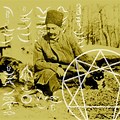
ACanadian self-styled spiritual leader has been charged with sexually assaulting followers who he transfixed by silently staring at them for hours.

John de Ruiter, 63, was arrested and charged with sexual assaults on four alleged victims in separate incidents between 2017 and 2020.
Mr de Ruiter has for decades run the College of Integrated Philosophy, also known as the Oasis Group, in Edmonton, Alberta.
Long accused of running a cult, he attracted a global following including devotees from Europe who went to Canada to be stared at by him, believing he could see into their souls.
Mr de Ruiter has been variously described as having a "Charlton Heston smile" and "steely blue eyes", and as being "handsome like a top-tier Porsche salesman".
One report detailed how he would sit in an armchair on a stage between two huge video screens showing close-ups of his face.
He would then silently stare at the audience in what was called a "dialogue of silent connection".
One journalist who attended a three-hour meeting called him the "L. Ron Hubbard of staring", and reported that the audience was mostly middle-aged women.
He has also been described as a "Messianic figure with a piercing gaze" and a "blue-eyed saviour".
A Canadian police spokesman said: "It was reported that the accused informed certain female group members that he was directed by a spirit to engage in sexual activity with them. And that engaging in sexual activity with him will provide them an opportunity to achieve a state of higher being or spiritual enlightenment."

Police said they were asking any other complainants to contact them. They described Mr de Ruiter as a "self-appointed spiritual leader".
A spokesman for Mr de Ruiter said he vehemently denied the allegations. She told Canadian media: "Mr de Ruiter will be represented by legal counsel and intends to vigorously contest these charges in a court of law. This situation is deeply impactful for those who know Mr De Ruiter."
Staring began after 'spiritual awakening'
The group, which Mr de Ruiter founded in 2006, is based in an office building in Edmonton and also conducts spiritual retreats at a campground 200km outside the city.
Mr De Ruiter was originally from rural Alberta and worked as a maker of orthopaedic shoes. He went on to join the Lutheran church and then developed his own teachings, initially holding meetings in a bookshop.
Stephen Kent, a professor specialising in cults and alternative religions at the University of Alberta, told Canadian television: "De Ruiter claims to be the living embodiment of truth, he claims to have received messages from Jesus, he claims to get spiritual insight that directs and justifies his behaviours.
"One of the questions that may come up at trial is whether he abused that power, whether he abused the trust that was placed in him."
According to his website, Mr de Ruiter began his staring meetings following a spiritual awakening which led to him being "fully absorbed into what we are after we die".
He learned that "when you are deeply gentled and quieted" that was the "most basic form of true beingness".
The website said that "living this way at any personal cost is the key to the fulfillment of our purpose for being here". It also said that he "does not use sex as a means of control or submission over any person".
How an anti-Semitic ‘fake news’ conspiracy drove mass murder in Franco’s Spain

How an anti-Semitic ‘fake news’ conspiracy drove mass murder in Franco’s Spain
The horrors of the Second World War have tended to overshadow the awfulness of the conflicts that preceded it in Abyssinia, China and Spain. No one knows for sure how many died in the Spanish Civil War of 1936-1939, but half a million is a reasonable estimate.

What is clear is that much of the killing was done off the battlefield. Franco’s rebels executed at least 130,000 opponents, the Republicans maybe 50,000. Most historians have tended to characterise the government forces’ atrocities as largely unofficial and spontaneous, while the Nationalists were following a systematic extermination programme to “cleanse” Spain of its internal enemies as a necessary prelude to an era of regeneration.
To prepare the ground the rebel leaders had to persuade their followers – and themselves – of the malignity of their opponents. Instead of being fellow Spaniards with a different political outlook, they were demonised as the foot soldiers of evil conspiratorial forces who wanted to abolish their religion, steal their property and destroy their culture and traditions. The conspirators were the usual early 20th-century suspects: a diabolical alliance of freemasons, Jews and bolsheviks.
Paul Preston has spent a lifetime studying the war, and in this deeply researched and revealing book he turns his attention to six men who propagated the ideas powering the Francoists’ annihilationist tendencies. His dirty half-dozen includes big names like General Emilio Mola, who directed the anti-government plot and who set the tone for what followed by officially sanctioning terror tactics to “eliminate without scruples everyone who does not think as we do”.
Preston also introduces us to some less well-known and extraordinarily unpleasant characters, among them Gonzalo de Aguilera, an erudite, aristocratic landowner and cavalry officer who worked as a liaison officer with foreign media during the war. Aguilera was educated in England by Jesuits, passing through, I was startled to learn, my old school Wimbledon College before going on to Stonyhurst.

He was regarded by some of his charges as a bit of a character, given to regaling them in the bar with his hair-raising views. A pet theory was that Spain’s problems were all due to the foolish extension of mains drainage to the working classes. “Sewers caused all our troubles,” he told one correspondent. “Had we no sewers in Madrid, Barcelona, Bilbao, all these Red leaders would have died in their infancy.” Proper drains should have been “reserved for those who deserve them, the leaders of Spain, not the slave stock.”
The more perceptive hacks, such as Martha Gellhorn, understood that this wasn’t just provocation. Many Spanish landowners indeed regarded their peasantry as slaves and treated them with sadistic harshness. The rising assertiveness of the masses, peaking with the advent of the Republic, astonished and alarmed them. Who had put them them up to it? The answer was the “contubernio judeo-masónico-bolchevique” which Preston translates as “the filthy Jewish-masonic-Bolshevik concubinage”.
At first sight, this was going to be a hard message to sell. In 1936 there were barely 6,000 Jews in Spain and the Communist party was tiny. There were masons in high places, but their code of secrecy meant that no one knew who and how many. Franco’s propagandists had a natural ally in the Catholic church, which had waged a centuries-old war on freemasonry and linked Jews to Christ’s crucifixion.
One of the most effective purveyors of what Preston casts as an early example of “fake news” was a villainous priest, Juan Tusquets. He popularised the idea that the rebels were engaged in a crusade against a Republic which was, in fact, the enemy of Christian civilization, and, to cement the argument, he brought out his own edition of the Protocols of the Elders of Zion.

Despite having been exposed as a forgery by the London Times in 1921 and the Frankfurter Zeitung three years later, that tract was swallowed whole by many on the rebel side, including Franco. As with fans of the Protocols everywhere, newspaper revelations did nothing to shake their faith, being taken instead as confirmation of the conspirators’ power and reach. The truth didn’t matter much matter anyway. Like Josef Goebbels, Tusquets believed in the power of the big lie, accusing the moderate, piously Catholic President of the Republic, Niceto Alcalá-Zamora, of being both a freemason and a Jew.
The narrative spun by the nationalist theorists provided a justification for the rebels’ real concerns. These were summed up by John Whitaker of the Chicago Daily News as “simple in the extreme. They were outnumbered by the masses. They feared the masses and they proposed to thin down the numbers of the masses.”
Nonetheless the hatred felt towards the phantom “contubernio” was real and the venom spread by the propagandists lingered in the national bloodstream. Franco’s victory in 1939 was followed not by reconciliation but by an orgy of vengeance in which tens of thousands of freemasons and leftists were judicially murdered. Newspapers and books peddled anti-Semitic themes right until Franco’s death in 1975 and post-war Spain was a safe haven for the likes of the Belgian fascist leader and SS officer Léon Degrelle.
Preston’s study is based on profound knowledge but also shrewd human understanding. As well as exposing the pyschic underpinnings of the Spanish warm it also helps us see the world war that followed for what it was: the continuation and culmination of long-brewing political and cultural pathologies.
Architects of Terror: Paranoia, Conspiracy and Anti-Semitism in Franco’s Spain is published by HarperCollins at £30. To order your copy for £25 call 0844 871 1514 or visit Telegraph Bookshop
Patrick Bishop’s new book Paris ’44 will be published by Penguin next year
Articles-Latest
- Pope Leo's Travels 2026
- Donald Trump Insults Pope Leo
- Secrets of the Vatican
- Jews - Hebrews - Israelites - What is the Difference
- Easter Sunday Celebrations
- Job Beyond the Verses
- The Dark Fate of the Soldier who Crucified Jesus on the Cross
- What Happened to Jesus's 12 Apostles
- Book of Judges
- Fasting & Praying
- Pope Leo's Visit to Monaco
- Spiritual Warfare
- Prayers for Healing
- Night Prayers
- Prayers - To start your Day
- Palm Sunday 2026
- The 12 Tribes
- Revelations
- The Last Days
- The Book of Psalms
Articles-Most Read
- Home
- Plants that feel and Speak
- Let There Be Light
- The Singing Forest
- The Singing Forest-2
- Introduction
- Meditation
- Using Essential Oils for Spiritual Connection
- Making the Spiritual Connection
- Plants that Feel and Speak-2
- Heaven Scent
- Purification
- Anointing
- The Sanctity of Plants
- Essential Oils: The unseen Energies
- The Aroma Of Worship-Foreward
- Methods Of Use
- Spiritual Blending
- The Aroma Of Worship - Introduction
- Handling and Storage