Login
Who's On Line
We have 141 guests and no members online
MailChimp Signup



Most Read Posts

One million flock to Pope’s Congo Mass on day of peace and forgiveness
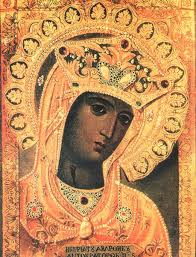
One million flock to Pope’s Congo Mass on day of peace and forgiveness
An estimated one million Congolese people have poured into the capital’s main airport for Pope Francis’ first big Mass in Africa, on a day dedicated to his call for peace and forgiveness in a country wracked by decades of violence.
Many of the faithful spent the night on the vast airfields of Kinshasa’s Ndolo airport ahead of the first papal visit to the overwhelmingly Christian country since St John Paul II’s last trip in 1985.
The crowds cheered wildly when Francis began a languid loop around the airfields in his open-sided popemobile, some of them running alongside or waving flags.

Many of the women wore dresses and skirts made of pagne, a wax print fabric featuring images of Francis or other religious symbols.
The Wednesday morning Mass was Francis’ first big event in the Democratic Republic of the Congo after he arrived on Tuesday and, in his opening speech to government authorities, condemned the centuries-long plundering of Africa’s mineral and natural wealth by foreign powers.
Later on Tuesday, Francis was to meet with victims of the fighting in Congo’s east, where rebel groups have intensified attacks over the past year as they seek to expand their territory.
Francis had originally planned to visit the North Kivu provincial capital, Goma, but had to cancel the stop due to the fighting that has forced some 5.7 million people to flee their homes, exacerbating a humanitarian crisis in Congo where already some 26.4 million people were facing hunger, according to the World Food Programme.

Fighting in eastern Congo, which has more than 120 armed groups, has simmered for years but spiked in late 2021 with the resurgence of the M23 group, which had been largely dormant for nearly a decade.
The rebels have captured swathes of land and are accused by the United Nations and rights groups of committing atrocities against civilians.
On Tuesday, Francis condemned the fighting and was to repeat his call for peace during his meeting with victims of the conflict.
The appointment was to include a joint call for the victims to pardon their assailants, according to Vatican organisers.
The Vatican estimated that one million people were on hand for Francis’ Mass, citing local officials.
The airport fields had a capacity of 1.5 million people and were not full by the time Francis’ Mass began.
Pope’s trip to Africa spotlights conflict and church’s future
Pope’s trip to Africa spotlights conflict and church’s future
Pope Francis has begun a six-day visit to the Democratic Republic of Congo and South Sudan, aiming to bring a message of peace to two countries riven by poverty, conflict and what Francis has called a lingering “colonialist mentality” that still considers Africa ripe for exploitation.
He landed at Kinshasa’s airport and was greeted by tens of thousands of Congolese who lined the main road into the city, some standing three or four deep, with children in school uniforms taking the front row.
“The pope is 86 years old but he came anyway. It is a sacrifice and the Congolese people will not forget it,” Sultan Ntambwe said as he waited for his arrival.
Aid groups are hoping the trip will shine a spotlight on two of the world’s forgotten conflicts and rekindle international attention on some of Africa’s worst humanitarian crises, amid donor fatigue and new aid priorities in Ukraine.

But the pope’s trip will also bring him face-to-face with the future of the Catholic Church.
Africa is one of the only places in the world where the Catholic flock is growing.
That makes the trip, his fifth to the African continent in his 10-year pontificate, all the more important as he seeks to make his mark on reshaping the church as a “field hospital for wounded souls” where all are welcome and poor people have a special pride of place.
“Yes, Africa is in turmoil and is also suffering from the invasion of exploiters,” the pope told The Associated Press in an interview last week.
But he said the church can also learn from the continent and its people.
“We need to listen to their culture: dialogue, learn, talk, promote,” Francis said, suggesting that his message would differ from the scolding tone St John Paul II used in 1980 and 1985 when he reminded Congolese priests and bishops of the need to stick to their celibacy vows.
Congo, Francis’s first stop, stands out as the African country with most Catholics.
Half of its 105 million people are Catholic, the country counts more than 6,000 priests, 10,000 nuns and more than 4,000 seminarians – 3.6% of the global total of young men studying for the priesthood.
Congolese faithful were flocking to Kinshasa for Francis’s main event, a Mass on Wednesday at Ndolo airport that is expected to draw as many as two million people in one of the biggest gatherings of its kind in Congo and one of the pope’s biggest Masses ever.
Banners emblazoned with the pope’s image carried messages including “Pope Francis, the city of Kinshasa welcomes you with joy.”
Jean-Louis Mopina, 47, said he walked about 45 minutes to Kinshasa’s airport before the pope’s arrival on Tuesday.
“He has come like a pilgrim sent by God,” Mr Mopina said. “His blessing will give us peace in our hearts.”
On the eve of the pope’s visit, President Felix Tshisekedi met with foreign diplomats in Kinshasa and told them the visit was a sign of solidarity “particularly with the battered populations of the eastern part of the country, prey to acts of violence and intolerance that you are witnessing”.
The trip was originally scheduled for July, but was postponed because of the pope’s knee problems.
It was also supposed to have included a stop in Goma, in eastern Congo, but the surrounding North Kivu region has been plagued by intense fighting between government troops and the M23 rebel group, as well as attacks by militants linked to the so-called Islamic State terrorist group.

The fighting has displaced some 5.7 million people, a fifth of them last year alone, according to the World Food Programme.
Instead, the pope will meet with a delegation of people from the east who will travel to Kinshasa for a private encounter at the Vatican embassy.
The plan calls for them to participate in a ceremony jointly committing to forgive their assailants.
The second leg of his trip will bring him to South Sudan, the world’s youngest country where continued fighting has hampered implementation of a 2018 peace deal to end a civil war.
The South Sudan stop also marks a novelty in the history of papal travel, in that the pope will be joined on the ground by the Archbishop of Canterbury Justin Welby and the moderator of the Church of Scotland, the Rt Rev Iain Greenshields.
The aim of the three-way visit is to show a united Christian commitment to helping South Sudan make progress on the implementation of the 2018 accord.
The pope presided over a similar joint initiative in 2019 in the Vatican when he famously got down on hands and knees and kissed the feet of South Sudan’s rival leaders, begging them to make peace.
Reference: PA Media: Story by By Nicole Winfield, Jean-Yves Kamale
Seven people killed in ‘terror attack’ shooting at synagogue in Jerusalem

Seven people killed in ‘terror attack’ shooting at synagogue in Jerusalem
A gunman has killed seven people and wounded 10 others in a shooting outside a synagogue in east Jerusalem.
The attacker was shot and killed following one of the deadliest attacks on Israelis in years, and comes a day after nine Palestinians were killed earlier this week.
Israeli police described the shooting as a “terror attack” and said it took place at a synagogue in the Neve Ya’akov settlement.
Officers say the gunman opened fire at a group of Israelis at around 8.15pm and was waiting for them outside as they came out, according to Haaretz.

Footage from the scene showed several victims, either covered by silver blankets or being tended to by emergency workers.
Prime Minister Benjamin Netanyahu’s Office said he is receiving rolling updates and he intends to convene a security briefing. He visited the scene this evening. Defence minister Yoav Gallant has called a meeting with his army chief and other top security officials.
Israel’s opposition leader and former prime minister Yair Lapid condemned the “horrific and heartbreaking” attack, which has been met with international condemnation.
British foreign secretary James Cleverly tweeted: “Appalling reports of a terror attack in Neve Yaakov this evening.
“To attack worshippers at a synagogue on Holocaust Memorial Day, and during Shabbat, is horrific. We stand with our Israeli friends.”

The US state department also condemned the shooting with spokesperson Vedant Patel telling reporters that officials were in touch with their Israeli counterparts.
“This is absolutely horrific,” Ms Patel said. “Our thoughts, prayers and condolences go out to those killed by this heinous act of violence.
“We condemn this apparent terrorist attack in the strongest terms. Our commitment to Israel’s security remains ironclad.”
UN secretary-general Antonio Guterres said he was “deeply worried” by the current escalation of violence and urged “utmost restraint”, spokesperson Stephane Dujarric said in a statement.
The United Arab Emirates also condemned Friday’s synagogue attack, the state news agency reported, citing a foreign ministry statement.

Neve Ya’akov is a site of historic discord – considered by Israelis as an area within Jerusalem, and by Palestinians and most of the international community as illegally occupied land annexed after a 1967 war.
There was no initial claim of responsibility for the synagogue attack, which took place as worshippers attended Sabbath services on International Holocaust Remembrance Day.
However, Hamas spokesperson Hazem Qassem said the events were connected, adding: “This operation is a response to the crime conducted by the occupation in Jenin and a natural response to the occupation criminal actions.”
The smaller militant group Islamic Jihad also praised the attack without claiming responsibility.

According to Israeli media, the gunman was a Palestinian resident of east Jerusalem, though there has been no official confirmation.
Spontaneous rallies spilled out into the streets of Gaza following the attacks as rounds of celebratory gunfire and car horns bellowed through the Palestinian exclave. Some emerged from dessert shops with large trays of sweets to distribute, while calls of “God is great!” rang out from mosque loudspeakers.

The killings took place a day after Israeli troops killed nine Palestinians in the deadliest West Bank raid in years.
Scuffles between Israeli forces and Palestinian protesters erupted after the funeral for a 22-year-old north of Jerusalem and elsewhere in the occupied West Bank on Friday.
In the streets of the town of al-Ram, masked Palestinians threw stones and set off fireworks at Israeli police, who responded with tear gas.
Israeli police were out in force in Jerusalem as scores of Muslim worshippers gathered for prayers in the stone courtyard of the Al-Aqsa Mosque and chanted in solidarity with those killed in the Jenin raid.
Tensions at the holy site, revered by Jews as the Temple Mount, have triggered violence in the past, including a bloody Gaza war in 2021. The site is considered the third-most sacred in Islam and the holiest place in Judaism.
“In spirit and blood, we will sacrifice you,” Muslim worshippers shouted. “Greetings Jenin, greetings Gaza.”
Reference: Story by Emily Atkinson
Protests against burning of Koran held across Middle East
Protests against burning of Koran held across Middle East
Protests have been held in several predominantly Muslim countries to denounce the recent desecration of Islam’s holy book by far-right activists in Sweden and the Netherlands.
The protests in countries including Pakistan, Iraq, Iran and Lebanon ended with people dispersing peacefully.
In Pakistan’s capital Islamabad, police stopped some demonstrators trying to march towards the Swedish embassy.
 Angry protesters in Beirut burn Swedish and Dutch flags (Hassan Ammar/AP)© Provided by PA Media
About 12,000 Islamists from the Tehreek-e-Labiak Pakistan party rallied in Lahore, the capital of the eastern Punjab province, to denounce the desecration of the Koran in the two European countries.
In his speech to the demonstrators, Saad Rizvi, the head of the TLP, asked the government to lodge a strong protest with Sweden and the Netherlands so that such incidents do not happen again.
Similar rallies were also held in the southern city of Karachi and in the north west.
In the Iranian capital Tehran, hundreds of people marched after Friday prayers during which they burned a Swedish flag.
In Beirut, about 200 angry protesters burned the flags of Sweden and the Netherlands outside the blue-domed Mohammed Al-Amin mosque in central Martyrs Square.
Small protests over the Koran burning also took place in Bahrain.

Earlier this month, Rasmus Paludan, a far-right activist from Denmark, received permission from police to stage a protest outside the Turkish embassy in Stockholm where he burned the Koran.
Days later, Edwin Wagensveld, Dutch leader of the far-right Pegida movement in the Netherlands, tore pages out of a copy of the Koran near the Dutch parliament and stamped on them.
The moves angered millions of Muslims around the world and triggered protests.
On Friday, Mr Paludan, who holds Danish and Swedish citizenship, told Swedish newspaper Aftonbladet that he would replicate the protest in front of the Turkish embassy in Copenhagen every Friday until Sweden is admitted into Nato.
Turkey’s state-run Anadolu Agency said the Danish ambassador was summoned to the Turkish Foreign Ministry where officials “strongly condemned the permission given to this provocative act which clearly constitutes a hate crime”.
Swedish officials have stressed that freedom of expression is guaranteed by the Swedish constitution and gives people extensive rights to express their views publicly, though incitement to violence or hate speech is not allowed.
Demonstrators must apply to police for a permit for a public gathering. Police can deny such permits only on exceptional grounds, such as risks to public safety.

Iraq’s powerful Shiite cleric Muqtada al-Sadr asked in comments released on Friday whether freedom of speech means offending other people’s beliefs. He asked why “doesn’t the burning of the gays’ rainbow flag represent freedom of expression”.
The cleric added that burning the Koran “will bring divine anger”.
Hundreds of his supporters gathered outside a mosque in Baghdad waving copies of the Koran.
Reference: Story by By Associated Press Reporter
Articles-Latest
- Pope Leo's Travels 2026
- Donald Trump Insults Pope Leo
- Secrets of the Vatican
- Jews - Hebrews - Israelites - What is the Difference
- Easter Sunday Celebrations
- Job Beyond the Verses
- The Dark Fate of the Soldier who Crucified Jesus on the Cross
- What Happened to Jesus's 12 Apostles
- Book of Judges
- Fasting & Praying
- Pope Leo's Visit to Monaco
- Spiritual Warfare
- Prayers for Healing
- Night Prayers
- Prayers - To start your Day
- Palm Sunday 2026
- The 12 Tribes
- Revelations
- The Last Days
- The Book of Psalms
Articles-Most Read
- Home
- Plants that feel and Speak
- Let There Be Light
- The Singing Forest
- The Singing Forest-2
- Introduction
- Meditation
- Using Essential Oils for Spiritual Connection
- Making the Spiritual Connection
- Plants that Feel and Speak-2
- Heaven Scent
- Purification
- Anointing
- The Sanctity of Plants
- Essential Oils: The unseen Energies
- The Aroma Of Worship-Foreward
- Methods Of Use
- Spiritual Blending
- The Aroma Of Worship - Introduction
- Handling and Storage