Login
Who's On Line
We have 16 guests and no members online
MailChimp Signup
Subscribe to Newsletter




Most Read Posts

The 12 Tribes

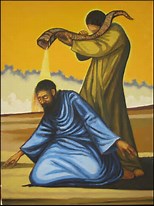
The Twelve Tribes
The Twelve Tribes of Israel were the descendants of Jacob’s twelve sons, forming the
foundational family groups of the ancient Israelite nation.
Origins and Names
The Twelve Tribes trace back to Jacob, later named Israel, who had twelve sons by his
wives Leah and Rachel, and their maidservants Zilpah and Bilhah. Each son became
the patriarch of a tribe: Reuben, Simeon, Levi, Judah, Dan, Naphtali, Gad, Asher,
Issachar, Zebulun, Joseph, and Benjamin. Joseph’s tribe was later split into
Ephraim and Manasseh, maintaining the count of twelve tribes despite Levi
receiving no land.
Tribal Roles and Territories
After the Israelites’ exodus from Egypt, the tribes settled in Canaan, with land apportioned
under Joshua’s leadership. The Levites were set apart for priestly duties and received cities
rather than a territorial inheritance. The other tribes occupied regions reflecting both practical
and divine considerations, such as Judah in the south, Ephraim in the central highlands, and
Manasseh on both sides of the Jordan River.
Significance
The tribes formed a confederation during the period of the Judges. After King Solomon’s
reign, the kingdom split into the Northern Kingdom of Israel (ten tribes) and the
Southern Kingdom of Judah (Judah, Benjamin, and Levites). The Assyrian
conquest in 722 BCE led to the dispersion of the northern tribes, known as the
Ten Lost Tribes, while the southern tribes experienced the Babylonian exile
but later returned.
Symbolism and Legacy
Each tribe had symbolic identifiers, often animals or objects, used in battle, worship, and
prophecy. For example, Judah is symbolized by a lion, representing strength and kingship,
while Dan is associated with scales of justice. The tribes are referenced in biblical prophecy,
such as Ezekiel’s vision of restoration and the Book of Revelation, where 12,000 members
from each tribe are sealed.
Modern Relevance
The Twelve Tribes continue to influence Jewish identity, religious tradition, and biblical
scholarship. Some groups claim descent from the lost tribes, and the tribes’ stories are
central to understanding Israelite history, culture, and theology.
Summary
The Twelve Tribes of Israel represent both a historical and spiritual framework for the
Israelite people, illustrating family lineage, territorial organization, and divine covenant.
Their legacy persists in religious texts, cultural identity, and ongoing scholarly study,
highlighting their enduring significance in history and faith.
Reference: Co-Pilot
Articles-Latest
- Pope Leo's Travels 2026
- Donald Trump Insults Pope Leo
- Secrets of the Vatican
- Jews - Hebrews - Israelites - What is the Difference
- Easter Sunday Celebrations
- Job Beyond the Verses
- The Dark Fate of the Soldier who Crucified Jesus on the Cross
- What Happened to Jesus's 12 Apostles
- Book of Judges
- Fasting & Praying
- Pope Leo's Visit to Monaco
- Spiritual Warfare
- Prayers for Healing
- Night Prayers
- Prayers - To start your Day
- Palm Sunday 2026
- The 12 Tribes
- Revelations
- The Last Days
- The Book of Psalms
Articles-Most Read
- Home
- Plants that feel and Speak
- Let There Be Light
- The Singing Forest
- The Singing Forest-2
- Introduction
- Meditation
- Using Essential Oils for Spiritual Connection
- Making the Spiritual Connection
- Plants that Feel and Speak-2
- Heaven Scent
- Purification
- Anointing
- The Sanctity of Plants
- Essential Oils: The unseen Energies
- The Aroma Of Worship-Foreward
- Methods Of Use
- Spiritual Blending
- The Aroma Of Worship - Introduction
- Handling and Storage