Login
Who's On Line
We have 45 guests and no members online
MailChimp Signup




Most Read Posts

Scientology
Scientology
In 1950, L. Ron Hubbard—the founder of Scientology—published his bestselling book “Dianetics: The Modern Science of Mental Health.” Though he originally conceived of Dianetics as a “science of the mind,” Hubbard later adapted his theories into a more religious approach, calling it the Church of Scientology. Founded in 1954 on Hubbard’s teachings, and now led by David Miscavige, Scientology has spread from its origins in Southern California throughout the United States and the world, generating a lot of debate along the way.
L. Ron Hubbard and “Dianetics”
Born in 1911 in Tilden, Nebraska, Lafayette Ron Hubbard left George Washington University, where he was studying civil engineering, after two years. He later launched a successful career writing stories for “pulp” magazines in the 1930s, ultimately focusing on science fiction.
During World War II, Hubbard served in the U.S. Naval Reserves, and he later claimed to have healed himself of several serious war-related ailments using the techniques he explained in his 1950 book “Dianetics: The Modern Science of Mental Health.”
As laid out in “Dianetics,” each human individual has an analytic mind, which (like Freud’s concept of the conscious mind) is normally in charge of making the daily decisions and judgments necessary for survival.
In times of stress, pain or other trauma, however, it is the reactive mind (similar to the Freudian subconscious) that takes over. According to Hubbard’s “mental science,” the lasting scars from those negative experiences on the reactive mind are known as engrams. To get rid of these engrams, Hubbard prescribed a new type of therapeutic process called “auditing.”
In one-on-one meetings with a counselor, or auditor, an individual would answer a series of questions designed to purge these unconscious memories and allow the analytic mind to regain control.
What Is Scientology?: From Dianetics to Religion
Post-World War II audiences proved receptive to Hubbard’s claims of the healing powers of the mind, and the book quickly became a bestseller. Dianetics groups spread across the country and abroad, even as the American Psychological Association and other organizations questioned Hubbard’s claims regarding the scientific nature of his approach.
In 1952, Hubbard introduced a new aspect of the auditing process: a device he called the electropsychometer, or E-meter, which measures the strength of a small electrical current that runs through the body as an individual answers the auditor’s questions.
The introduction of the E-Meter helped mark Hubbard’s transition from Dianetics to Scientology, a term he said derived from the Latin scio (study) and the Greek logos (knowing). This new “science of knowledge” employed the principles of Dianetics in a different framework: Rather than an approach to mental health, Hubbard’s ideas would now become the basis for a new religious movement.
On February 18, 1954, incorporation papers were filed in Los Angeles for the Church of Scientology of California, the first official Scientologist organization.
Scientology Beliefs: Going “Clear” and Beyond
The shift from Dianetics to Scientology included a focus on humans as immortal souls (thetans, in Scientology terminology) that are trapped within multiple bodies through various lifetimes. After purging the reactive mind of past trauma scars through the auditing process, an individual can become “clear”—a concept from Dianetics that represents a major goal in Scientology.
Those who go “clear” are believed to reach a higher level of ethical and moral standards, greater creativity and control over their environment and even less susceptibility to disease.
Individual Scientology churches and missions, known as “orgs,” began using Scientology materials to teach the faith’s basic tenets and conduct auditing procedures in order to help members reach the “clear” state.
Each local org was set up to process clients, including discussing their needs, recommending a product (usually a package of auditing sessions, known as an “intensive”) to fit those needs and accepting payment for that product. After reaching “clear,” members could go on to the more advanced levels of the church, and become “Operating Thetans,” or simply “OTs.”
David Miscavige and Death of L. Ron Hubbard
Since its origins, Scientology has faced opposition and controversy, including long-running complaints from the medical and scientific communities over Hubbard’s claims regarding mental health and the science behind the E-meters, as well as complaints over its status as a religion. As it grew, Scientology became involved in multiple legal battles, including lawsuits filed by former members claiming serious mistreatment by the church.
Though Hubbard himself headed up the Church of Scientology in its early years, in 1966 he resigned all offices and focused on developing post-Clear, Operating Thetan levels. He spent most of his time during this period aboard a fleet of seagoing vessels staffed with young, particularly devout Scientologist volunteers. The Sea Organization, or Sea Org, as they called themselves, became the elite of the Scientology movement, the church’s equivalent of a religious order.
Amid increasing scrutiny of the movement he founded, Hubbard disappeared from public view in 1980. After his death in 1986, at the age of 74, Sea Org member and Hubbard protégé, David Miscavige, took over leadership of the church.
Hollywood and Headquarters in Clearwater, Florida
Scientology opened its first Celebrity Centre in Hollywood in the late 1960s, followed by satellites in New York, Las Vegas and Nashville and international outposts in cities like Paris, London, Vienna, Düsseldorf, Munich and Florence.
Among Scientology’s most visible adherents over the years have been Hollywood stars like Tom Cruise, Kirstie Alley, John Travolta, Isaac Hayes and others.
Despite its strong connection with California, and particularly Hollywood, the church’s spiritual headquarters are located in Clearwater, Florida. Since the mid-1970s, the Flag Service Organization there has been the destination for those seeking instruction in the highest levels of Scientology.
Scientology Today
The United States, home to the majority of Scientologists, has recognized Scientology as a religion, with the Internal Revenue Service (IRS) reaffirming the church’s tax-exempt status in 1993 after a long-running investigation. In 2013, Britain’s highest court similarly affirmed Scientology’s status as a religion by ruling that the group could conduct weddings at its church in London.
Other countries have refused to legitimize the faith: Germany has barred Scientologists from holding public office, while in 2009 a French court found the church guilty of fraud, but stopped short of banning it altogether.
According to the official Church of Scientology website, there are now more than 11,000 churches, missions and groups in 184 nations, and the movement welcomes more than 4.4 million new people each year. But scholars and outside observers of the movement say the number of practicing Scientologists may be lower than the church claims, possibly numbering in the hundreds of thousands worldwide.
- BY: HISTORY.COM EDITORS
T.D. Jakes breaks silence on Diddy allegations with emotional sermon-" Oh my " is this temptation?
T.D. Jakes breaks silence on Diddy allegations with emotional sermon-" Oh my " is this temptation?

T.D. Jakes is clearing up his name based on the viral accusations running rampant on social media over the last week. In several TikToks and social media posts, they alleged that the Bishop was involved in Diddy’s “sex parties” and that he had sexual relations with men. The allegations were addressed by Jakes’ PR rep who said that the comments were “unequivocally false and baseless.” However, this is the first time Jakes has spoken out about the rumors which he delivered on Christmas Day.
He continued, “I will not use this sacred day and this sacred pulpit to address a lie when I have chance to preach a truth. I will stand straight up, head up, back straight and preach the unadulterated, infallible word of God.”
T.D. Jakes Becomes A Trending Topic
As we previously mentioned, Jakes’ PR debunked the rumor this week.
“Recent claims circulating on pockets of social media about Bishop T.D. Jakes are unequivocally false and baseless,” Jordan A. Hora, an exec at the T.D. Jakes Group told The Christan Post.
The Bishop was a trending topic all last week in regards to the accusation that he was a participant in Diddy’s sex parties with sources backing up the rumors.
“I’m also told that multiple male escorts corroborated the fact that T.D. Jakes [has] slept with multiple men at Diddy’s parties and abroad,” the source claims, per The Christian Post. “It’s also been said that a young male has acquired a lawyer to represent him as he is set to sue Jakes for an incident that took place when he was just 16 years old.”
“The worst that could happen, if everything was true, all I got to do is repent sincerely, from my heart. There’s enough power in the blood to cover all kinds of sin. I don’t care what it is, the blood would fix it. But I ain’t got to repent about this,” T.D. Jakes declared in a Christmas Eve livestream that has since become private on YouTube.
- Story by Autumn Hawkins: Clutch Points
Six killed while praying after gunman storms Afghanistan mosque
Six killed while praying after gunman storms Afghanistan mosque
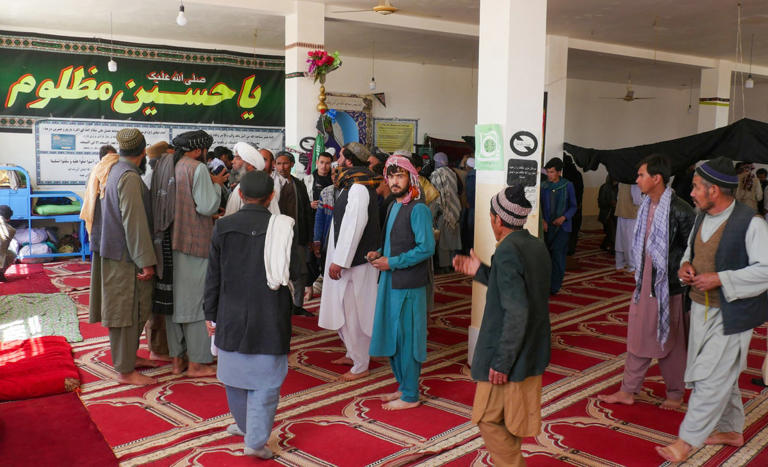
At least six people, including a child, were killed in Afghanistan’s Herat province after a gunman stormed a mosque, a Taliban official said on Tuesday.
he victims were offering prayers at the time of attack in the mosque which likely came under attack because it was a place of worship for the minority Shia Muslim community. The mosque’s imam was also among those killed, local media reports said.
An attacker entered the mosque and opened fire on Monday night in the Guzara district of northern Herat province, said Abdul Mateen Qani, a spokesperson for the Taliban’s Interior Ministry. The Taliban’s officials have launched an investigation, he added.
Another person was wounded in the attack when the attacker fled the mosque after opening fire, local reports said.
It is not immediately clear if the attacker belonged to any terrorist or militant group. No one has claimed responsibility for the attack.
Former Afghan president Hamid Karzai condemned the attack on X: “I strongly condemn the attack on the Imam Zaman Mosque in Guzara district of Herat province.”
“I consider this terrorist act to be against all religious and human standards. I have expressed my deepest condolences to the families of the victims of this tragic incident,” the former Afghan president said.
The attack was also condemned by other officials in the region.
“UNAMA condemns last night’s attack on a Shia mosque in Herat which killed and wounded at least 7, including a child. As stated in UNAMA reporting: Investigations and accountability for perpetrators and protection measures for #Afghanistan’s Shi’a communities are urgently needed,” the United Nation Assistance Mission in Afghanistan said on X, formerly Twitter.
Afghanistan has seen a surge in terror attacks in the recent months after the Taliban took control of the country in August 2021 post the exit of the US and Nato forces.
The Taliban’s biggest rival in the region, Islamic State – Khorasan Province – an Isis affiliate, has frequently targeted and attacked schools, hospitals and mosques in Afghanistan after the departure of the US and Nato forces.
- Story by Arpan Rai: The Independent:
St George’s Day 2024: Date, meaning and who England’s patron saint was
St George’s Day 2024: Date, meaning and who England’s patron saint was
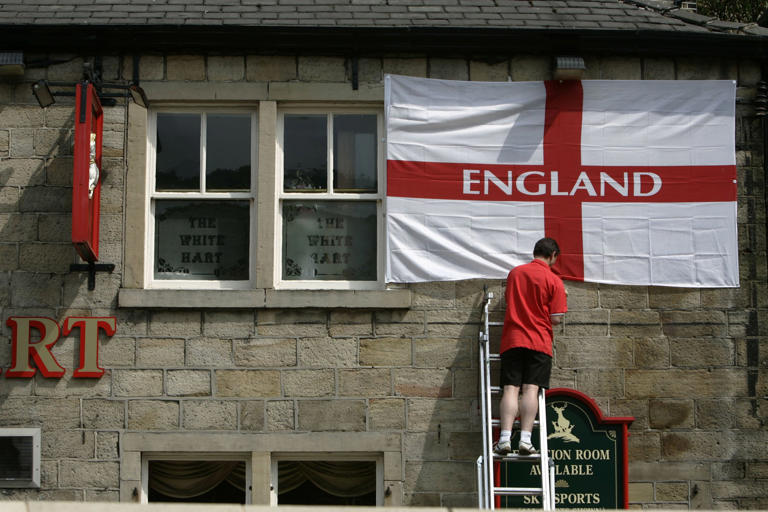
On Tuesday the patron saint of England will be celebrated as St George’s Day is observed.
Also known as the Feast of Saint George, the saint whose story involves slaying a dragon and rescuing a princess in the process, is also marked in Catalonia, the region of Aragon in Spain, Greece, Portugal, and Russia.
Here is everything you need to know regarding this year’s dates, the significance of the day and how the feast is celebrated, explained.
When is St George’s Day 2024?
St George’s Day is marked on 23 April every year, which this year falls on a Tuesday.
St George was thought to have died in AD303 after he was born sometime around the year AD280. It is believed that he was executed on this day for refusing to make a sacrifice in honour of the pagan gods during the persecutions of emperor Diocletian, making him a Christian martyr.
St George’s tomb can still be found in the Christian pilgrimage site of Lod, in modern-day Israel.
However, despite some protests, St George’s Day is not a bank holiday unlike St Patrick’s Day in Northern Ireland, and St Andrew’s Day in Scotland, meaning schools and businesses will open as usual on 23 April.
Who was St George?
Much mystery sounds the figure of St George due to lacking historical information. However, it is thought he was a soldier who fought in the Roman army and climbed the ranks to become personal guard to emperor Diocletian.
Contrary to common thought, St George was likely born in Cappadocia, modern-day Turkey, and died in Lydda, now Israel.
According to the saint’s popular story, he slayed a dragon and saved a princess in the tale found in Jacobus de Vorgine’s The Golden Legend, a 13th century selection of stories about the lives of saints.
According to the legend the only well in Silene, a town in Libya, was guarded by a dragon who required a daily human sacrifice for the townspeople to get water.
On the day of St George’s visit, the town’s inhabitants had selected a princess to be sacrificed.
But St George came to the rescue, slaying the dragon and saving the princess’s life, giving the people of Silene access to water before the town all then converted to Christianity as a sign of their gratitude to their hero.
How is St George’s Day celebrated?
In 1415 St George’s Day was made a national feast day and thus a holiday in England, and this continued until the 18th century.
Yet, since the Act of Union between England and Scotland in 1707 St George’s Day celebrations diminished.
Today, in the UK and other regions that observe the feast, flags bearing the St George’s cross are traditionally flown on houses and buildings, especially pubs, and people may display the symbol on a button or patch.
Pinning a rose blossom to your lapel or pocket is also a tradition, as it is associated with the saint’s death.
St George’s Day parades and medieval-themed festivals are common across England, while many pubs usually hold celebratory events and promotions.
Story by Emilia Randall: The I
Articles-Latest
- Pope Leo's Travels 2026
- Donald Trump Insults Pope Leo
- Secrets of the Vatican
- Jews - Hebrews - Israelites - What is the Difference
- Easter Sunday Celebrations
- Job Beyond the Verses
- The Dark Fate of the Soldier who Crucified Jesus on the Cross
- What Happened to Jesus's 12 Apostles
- Book of Judges
- Fasting & Praying
- Pope Leo's Visit to Monaco
- Spiritual Warfare
- Prayers for Healing
- Night Prayers
- Prayers - To start your Day
- Palm Sunday 2026
- The 12 Tribes
- Revelations
- The Last Days
- The Book of Psalms
Articles-Most Read
- Home
- Plants that feel and Speak
- Let There Be Light
- The Singing Forest
- The Singing Forest-2
- Introduction
- Meditation
- Using Essential Oils for Spiritual Connection
- Making the Spiritual Connection
- Plants that Feel and Speak-2
- Heaven Scent
- Purification
- Anointing
- The Sanctity of Plants
- Essential Oils: The unseen Energies
- The Aroma Of Worship-Foreward
- Methods Of Use
- Spiritual Blending
- The Aroma Of Worship - Introduction
- Handling and Storage