Login
Who's On Line
We have 38 guests and no members online
MailChimp Signup




Most Read Posts

Prayer and Meditation

Prayer and Meditation
Human beings have always yearned to contact infinite consciousness; they reach out- and find. The two universal ways this can be done are through prayer and meditation. Prayer is very proactive, in that we have something specific in our minds, and go for it. We ask for healing, help in finding love or a job. We entreat, with emotion. We ask for blessing, and give thanks.
Meditation, on the other hand, is passive. We empty our minds, stop thinking about health, love and the job, and go deep within. We try to go beyond the cluttered mind: past the senses, the intellect, the creative impulse, and past even the spiritual layer of ourselves, to completely merge with cosmic consciousness.
It has been said that prayer is our way of contacting God, and meditation is the means by which we get the reply. But prayer also gives the reply - it is a two-way channel of communication. Meditation certainly offers a reply, in that answers to unposed questions might come to a person, but it is also a way of reaching the light and wisdom of God. Both are about communication with the divinity, although prayer reaches out, and meditation in.
Prayer reaches out in supplication and humility; recognizing our connection with the divine, our familial relationship; saying 'Our father who art in heaven....'Meditation also recognizes a familiar relationship: between the original creative force that gave rise to the vibrations of the universe,now manifest in countless physical forms including us.
The connectedness of things beyond our immediate life is at the root of both prayer and meditation, and is that which we yearn for. The warmth of connection enfolds us like a mother's arms, giving reassurance, comfort and the strength to go on.
Fragrance has accompanied many prayers to heaven, and provided the heavenly scent that can act as the focus for meditation. It acts as an avenue, a pathway, a slide, a conduit or rocket to the stars.
Fragrance opens the consciousness, relaxes the mind and body, and puts us in another space - one where we are open and receptive to spiritual exploration.
Reference:The Fragrant Heavens / Valerie Ann Worwood
Safety Precautions

Safety Precautions
Not all natural plants or plant products are beneficial to health. Deadly Nightshade can be poisonous and stinging nettles sting. The following essential oils should not be used under any circumstances.
| Bitter Almond | Rue |
| Boldo Leaf | Sassafras |
| Calamus | Savin |
| Yellow Camphor | Southernwood |
| Horseradish | Tansy |
| Jaborandi Leaf | Thuja |
| Mugwort | Wintergreen |
| Mustard | Wormseed |
| Pennyroyal | Wormwood |
(list as recommended by the International Federation of Aromatherapists Code of Practice)
Essential oils are highly concentrated plant essences and should not be taken orally unless under medical supervision.
People with sensitive skin or allergic reactions to aromatic materials should always do a skin test twenty-four hours before use.
Some essential oils have been documented as being photo-sensitive and should not be applied to the skin before exposure to the sun. Of those mentioned in the above list, those that may fall into this category are among the citrus oils - especially bergamot and also angelica.
Reference: The Fragrant Heavens / Valerie Ann Worwood
Pregnant or Lactating Women

Pregnant or Lactating Women
Women who are pregnant or breastfeeding need to be aware that there are certain essential oils which should not be applied to the body at this time, and these are listed below. In all other methods , these women should use the minimum quantity of essential oils recommended in any particular section. (The oils listed here are in addition to those which should not be used by anyone which are listed under Safety and Precautions.
| Aniseed | Clary Sage | Marjoram | Rosemary |
| Basil | Clove | Myrrh | Sage |
| Bay | Cumin | Nutmeg | Spikenard |
| Birch | Fennel | Oregano | Tarragon |
| Black Pepper | Hops | Parsley Seed | Thyme |
| Cedarwood | Hyssop | Peppermint | Valerian |
| Cinnamon | Juniper | Pimento Berry | |
| Cistus | Mace |
People on Medication
Use half the recommended dosages. For example, if it states 'use 4-10 drops', use between 2 and 5 drops.
People using homeopathy
It's thought by some homeopaths that essential oils and other strong smells negate the effects of homeopathic treatments.
Tranquillizer Addiction
Use half the recommended dosage. For example, it it states 'use 4-10 drops', use between 2 and 5 drops.
Substance Addiction
Use half the recommended dosage. For example, if it states ' use 4-10 drops', use between 2 and 5 drops.
Alcohol Addiction
Use half the recommended dosage. For example, if it states 'use 4-10 drops', use between 2 and 5 drops.
Reference : The Fragrant Heavens / Valerie Ann Worwood
Carrier Oils
Carrier Oils
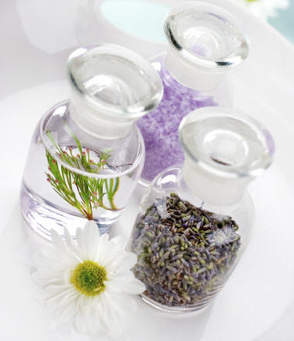
Most essential oils in their pure state are too highly concentrated to be used directly on the skin, so they are first diluted in a carrier oil. For example, 1 drop of essential oil may be all you need to use; that obviously will not spread very, but diluted in a base oil, it will cover quite a large area. Good carrier oils are : almond oil, apricot kernel oil, grapeseed oil and macadamia oil. Almond oil is easily obtained, has therapeutic qualities of its own, and can be used by almost anyone. Although olive oil has a venerable position in the Bible, it is too heavy for all-over body use.
There are a wide range of carrier oils available, and the words to look for on the bottle - which indicate quality - are 'organic', 'cold pressed' and 'virgin' 'organic' denotes that the plant material was grown without using biocides: that is pesticides, herbicides and fungicides made from synthetic chemicals or petrochemicals.
'Cold-pressed' indicates that the oil has not been through a heating process to extract the oil from the seed or other source material.
'Virgin' signifies that the oil came from the first pressing of the material.
Blending Essential Oils with Carrier / Base Oils For The Body
Quantities to Use
| Number Of Drops To Use | Blend the number of essential oil drops on the left into the volume of base oil on the right - which is either in ml or spoonfulls. |
| Essential Oils | Vegetable OilS | ||||
| Min Drops | Max drops | Per Ml | Teaspoons | Dessert Spoons | Table Spoons |
| 0.5 | 1 | 1 | 1 | - | - |
| 1 | 5 | 5 | 1 | 1 | 1 |
| 2 | 10 | 10 | 2 | 1 | 1 |
| 3 | 15 | 15 | 3 | 1 | 1 |
| 4 | 20 | 20 | 4 | 2 | 1 |
| 5 | 25 | 25 | 5 | 2 | 1 |
| 6 | 30 | 30 | 6 | 3 | 2 |
Pregnant and Lactating
Women who are pregnant or breastfeeding need to be aware that there are certain essential oils which not be applied to the body at this time, and these are listed below. In all other methods, these women should use the minimum quantity of essential oil recommended in any particular section. (The oils listed here are in addition to those which should not be used by anyone which are listed under Safety and Precautions Below).
| Aniseed | Clary Sage | Marjoram | Rosemary |
| Basil | Clove | Myrrh | Sage |
| Bay | Cumin | Nutmeg | Spikenard |
| Birch | Fennel | Oregano | Tarragon |
| Black pepper | Hops | Parsley Seed | Thyme |
| Cedarwood | Hyssop | Peppermint | Valerian |
| Cinnamon | Juniper | pimento | |
| Cistus | mace | Berry |
People on Medication
Use half the recommended dosages. For example, if it states 'use 4-10 drops' use between 2-5 drops.
People Using Homeopathy
It's thought by some homeopaths that essential oils and other strong smells negate the effects of homeopathic treatments.
Tranquillizer Addiction
Use half the recommended dosage. For example, if it states 'use 4-10drops' use between 2-5 drops.
Substance Addiction
Use half the recommended dosage. For example, if it states 'use 4-10 drops', use between 2-5 drops.
Alcohol Addiction
Use half the recommended dosage. For example, if it states 'use 4-10 drops', use between 2-5 drops.
Safety Precautions
Not all natural or plant products are beneficial to health. Deadly nightshade can be poisonous and stinging nettles sting. The following essential oils shout not be use under any circumstances.
| Bitter Almond | Rue |
| Boldo Leaf | Sassafras |
| Calamus | Savin |
| Yellow Camphor | Southernwood |
| Horseradish | Tansy |
| Jaborandi leaf | Thuja |
| Mugwort | Wintergreen |
| Pennyroyal | Wormseed |
Not all natural or plant products are beneficial to health. Deadly nightshade can be poisonous and stinging nettles sting. The following essential oils shout not be use under any circumstances.
(List as recommended by the International Federation of Aromatherapists code of Practice.)
Essential oils are highly concentrated plant essences and should not be taken orally unless under medical supervision.
People with sensitive skin or allergic reactions to aromatic materials should always do a skin test twenty-four hours before use.
Some essential oils have been documented as being phot-sensitive and should not be applied to the skin before exposure to the sun. Of those mentioned in this web site, those that may fall into the category are among the citrus oils - especially bergamot, and also angelica.
Reference: The Fragrant heavens: Valerie A Worwood
Articles-Latest
- Pope Leo's Travels 2026
- Donald Trump Insults Pope Leo
- Secrets of the Vatican
- Jews - Hebrews - Israelites - What is the Difference
- Easter Sunday Celebrations
- Job Beyond the Verses
- The Dark Fate of the Soldier who Crucified Jesus on the Cross
- What Happened to Jesus's 12 Apostles
- Book of Judges
- Fasting & Praying
- Pope Leo's Visit to Monaco
- Spiritual Warfare
- Prayers for Healing
- Night Prayers
- Prayers - To start your Day
- Palm Sunday 2026
- The 12 Tribes
- Revelations
- The Last Days
- The Book of Psalms
Articles-Most Read
- Home
- Plants that feel and Speak
- Let There Be Light
- The Singing Forest
- The Singing Forest-2
- Introduction
- Meditation
- Using Essential Oils for Spiritual Connection
- Making the Spiritual Connection
- Plants that Feel and Speak-2
- Heaven Scent
- Purification
- Anointing
- The Sanctity of Plants
- Essential Oils: The unseen Energies
- The Aroma Of Worship-Foreward
- Methods Of Use
- Spiritual Blending
- The Aroma Of Worship - Introduction
- Handling and Storage