Login
Who's On Line
We have 179 guests and no members online
MailChimp Signup



Most Read Posts

Ethiopian Bible is oldest and most complete on earth
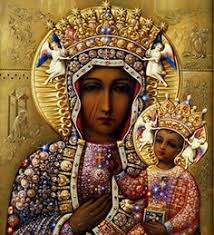
Ethiopian Bible is oldest and most complete on earth
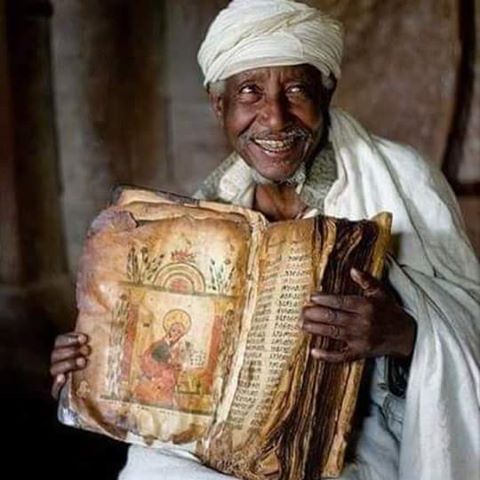
World’s first illustrated Christian Bible discovered at Ethiopian monastery
The world’s earliest illustrated Christian book has been saved by a British charity which located it at a remote Ethiopian monastery.
The incredible Garima Gospels are named after a monk who arrived in the African country in the fifth century and is said to have copied them out in just one day.
Beautifully illustrated, the colours are still vivid and thanks to the Ethiopian Heritage Fund have been conserved.
Abba Garima arrived from Constantinople in 494 AD and legend has it that he was able to copy the Gospels in a day because God delayed the sun from setting.
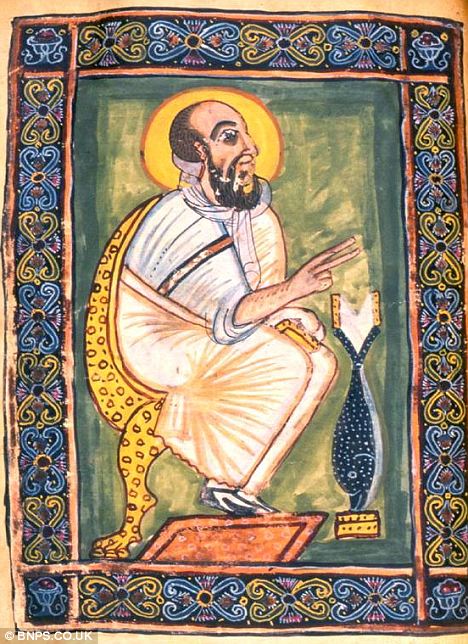 A page from the Garima Gospels – the world’s oldest Christian book found in a remote monastery in Ethiopia
 The incredible relic has been kept ever since in the Garima Monastery near Adwa in the north of the country, which is in the Tigray region at 7,000 feet.
Experts believe it is also the earliest example of book binding still attached to the original pages.
The survival of the Gospels is incredible considering the country has been under Muslim invasion, Italian invasion and a fire in the 1930s destroyed the monastery’s church.
They were written on goat skin in the early Ethiopian language of Ge’ez.
There are two volumes which date from the same time, but the second is written in a different hand from the first. Both contain illustrations and the four Gospels.
Though the texts had been mentioned by the occasional traveller since the 1950s, it had been thought they dated from the 11th century at the earliest.
Carbon dating, however, gives a date between 330 and 650 – which tantalisingly overlaps the date Abba Garima arrived in the country.
So the first volume could be in his hand – even if he didn’t complete the task in a day as the oral tradition states.
The charity Ethiopian Heritage Fund that was set up to help preserve the treasures in the country has made the stunning discovery.
It was also allowed incredibly rare access to the texts so experts could conserve them on site.
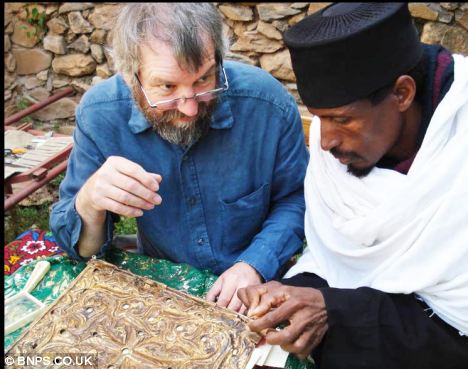
It is now hoped the Gospels will be put in a museum at the monastery where visitors will be able to view them.
Blair Priday from the Ethiopian Heritage Fund said: "Ethiopia has been overlooked as a source of these fantastic things.
"Many of these old Christian relics can only be reached by hiking and climbing to remote monasteries as roads are limited in these mountainous regions.
"All the work on the texts was done in situ and everything is reversible, so if in future they can be taken away for further conservation we won’t have hindered that.
"The pages had been crudely stitched together in a restoration in the 1960s and some of the pages wouldn’t even turn. And they were falling to pieces.
"The Garima Gospels have been kept high and dry which has helped preserve them all these years and they are kept in the dark so the colours look fresh.
"This was the most astounding of all our projects and the Patriarch, the head of the Ethiopian Church, had to give his permission.
"Most of the experts did the work for nothing.
"We are currently undertaking other restoration programmes on wall paintings and religious texts.
"We believe that preserving Ethiopia’s cultural heritage will help to increase visitor revenue and understanding of the extraordinary history of this country."
Muhammad Muhammad was a prophet and founder of Islam.
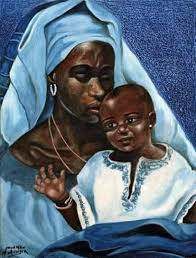
Muhammad
Muhammad was a prophet and founder of Islam.
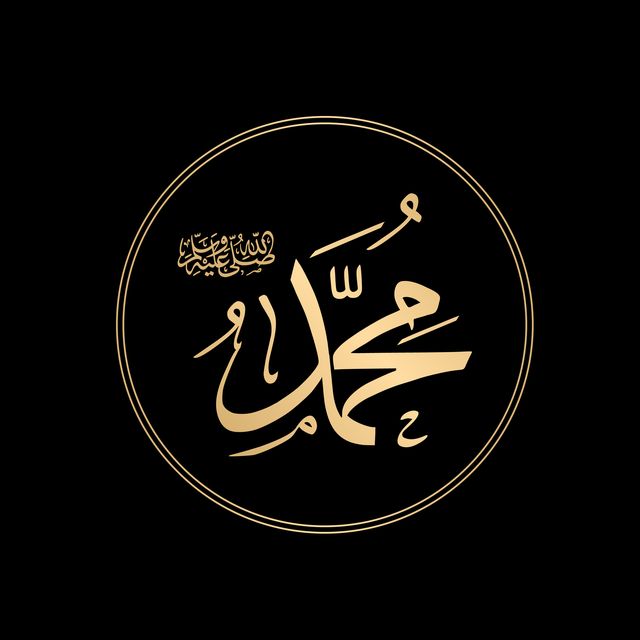
Who Was Muhammad?
Muhammad was the prophet and founder of Islam. Most of his early life was spent as a merchant. At age 40, he began to have revelations from Allah that became the basis for the Koran and the foundation of Islam. By 630 he had unified most of Arabia under a single religion. As of 2015, there are over 1.8 billion Muslims in the world who profess, “There is no God but Allah, and Muhammad is his prophet.”
Quick Facts
FULL NAME: Muhammad ibn Abdullah ibn Abd al-Muttalib ibn Hashim
BORN: c. 570
BIRTHPLACE: Makkah, Saudi Arabia
DEATH: June 8, 623
The Life of Muhammad
Muhammad was born around 570, AD in Mecca (now in Saudi Arabia). His father died before he was born and he was raised first by his grandfather and then his uncle. He belonged to a poor but respectable family of the Quraysh tribe. The family was active in Meccan politics and trade.

Many of the tribes living in the Arabian Peninsula at the time were nomadic, trading goods as they crisscrossed the desert. Most tribes were polytheistic, worshipping their own set of gods. The town of Mecca was an important trading and religious center, home to many temples and worship sites where the devoted prayed to the idols of these gods.
The most famous site was the Kaaba (meaning cube in Arabic). It is believed to have been built by Abraham (Ibrahim to Muslims) and his son Ismail. Gradually the people of Mecca turned to polytheism and idolatry. Of all the gods worshipped, it is believed that Allah was considered the greatest and the only one without an idol.
In his early teens, Muhammad worked in a camel caravan, following in the footsteps of many people his age, born of meager wealth. Working for his uncle, he gained experience in commercial trade traveling to Syria and eventually from the Mediterranean Sea to the Indian Ocean. In time, Muhammad earned a reputation as honest and sincere, acquiring the nickname “al-Amin” meaning faithful or trustworthy.
In his early 20s, Muhammad began working for a wealthy merchant woman named Khadijah, 15 years his senior. She soon became attracted to this young, accomplished man and proposed marriage. He accepted and over the years the happy union brought several children. Not all lived to adulthood, but one, Fatima, would marry Muhammad’s cousin, Ali ibn Abi Talib, whom Shi’ite Muslims regard as Muhammad’s successor.
The Prophet Muhammad
Muhammad was also very religious, occasionally taking journeys of devotion to sacred sites near Mecca. On one of his pilgrimages in 610, he was meditating in a cave on Mount Jabal aI-Nour. The Angel Gabriel appeared and relayed the word of God: “Recite in the name of your Lord who creates, creates man from a clot! Recite for your lord is most generous….”
These words became the opening verses of sūrah (chapter) 96 of the Qur'an. Most Islamic historians believe Muhammad was initially disturbed by the revelations and that he didn’t reveal them publicly for several years. However, Shi’a tradition states he welcomed the message from the Angel Gabriel and was deeply inspired to share his experience with other potential believers.
Islamic tradition holds that the first persons to believe were his wife, Khadija and his close friend Abu Bakr (regarded as the successor to Muhammad by Sunni Muslims). Soon, Muhammad began to gather a small following, initially encountering no opposition. Most people in Mecca either ignored him or mocked him as just another prophet. However, when his message condemned idol worship and polytheism, many of Mecca’s tribal leaders began to see Muhammad and his message as a threat.
Besides going against long standing beliefs, the condemnation of idol worship had economic consequences for merchants who catered to the thousands of pilgrims who came to Mecca every year. This was especially true for members of Muhammad’s own tribe, the Quraysh, who were the guardians of the Kaaba. Sensing a threat, Mecca’s merchants and leaders offered Muhammad incentives to abandon his preaching, but he refused.
Increasingly, the resistance to Muhammed and his followers grew and they were eventually forced to emigrate from Mecca to Medina, a city 260 miles to the north in 622. This event marks the beginning of the Muslim calendar. There Muhammad was instrumental in bringing an end to a civil war raging amongst several of the city’s tribes. Muhammad settled in Medina, building his Muslim community and gradually gathering acceptance and more followers.
Between 624 and 628, the Muslims were involved in a series of battles for their survival. In the final major confrontation, The Battle of the Trench and Siege of Medina, Muhammad and his followers prevailed and a treaty was signed. The treaty was broken by the Meccan allies a year later. By now, Muhammad had plenty of forces and the balance of power had shifted away from the Meccan leaders to him.
In 630, the Muslim army marched into Mecca, taking the city with minimum casualties. Muhammad gave amnesty to many of the Meccan leaders who had opposed him and pardoned many others. Most of the Meccan population converted to Islam. Muhammad and his followers then proceeded to destroy all of the statues of pagan gods in and around the Kaaba.
The Death of Muhammad
After the conflict with Mecca was finally settled, Muhammad took his first true Islamic pilgrimage to that city and in March, 632, he delivered his last sermon at Mount Arafat. Upon his return to Medina to his wife’s home, he fell ill for several days. He died on June 8, 632, at the age of 62, and was buried at al-Masjid an-Nabawi (the Mosque of the Prophet) one of the first mosques built by Muhammad in Medina.
Reference: By Biography.com Editors and Greg Timmons
World Day of the Poor – SVP Christmas Campaign 2024
World Day of the Poor – SVP Christmas Campaign 2024
In Matthew 26:11 Jesus tells his disciples “you will always have the Poor, you will not only have me”
It is important to consider where this sits in the Gospel, at the tail end of the previous chapter we have seen a reframing of the Poor, “whatever you do for the least of these children of mine you do for me” (Mt. 25:40) and is framed in the context of Jesus imminent betrayal, arrest, crucifixion, death and crucially resurrection.
Soon we will reflect on what this scripture tells us as Christians? As Disciples? As Vincentians? In light of this World Day of the Poor.
First we must rule out what the world might have us believe… “You will always have the Poor” could smack of futility. Any effort to alleviate the suffering of our neighbours will be fleeting, insufficient and at best temporary, systems will not change and inhumanity will always trump humanity. Why should we bother? Would it not be better to be glad for our lot in life and indeed celebrate the comforts we are afforded above others? Without hope, joy and purpose these words are an excuse for inaction.
As Christians what must we hear?, we often pray the Lords own prayer which contains the line “on earth as it is in Heaven”, we aspire to make our lived days as heavenly as it is possible to, when we encounter poverty and its hallmarks, dependence and distraction with the worlds quick solutions, purposelessness, hopelessness, numbness and a lack of life. Where we as Christians see poverty we ought to hear a calling to make it has Heaven albeit on earth. To recognise Christ in that situation, carried by us and met “by the least of these children of mine”. To the Christian that scripture must give us purpose and direction.
As Disciples what must we hear? Consider some of the other moments witnessed by the disciples where impossible need was noticed, responded to and miraculously met. The disciples remember the feeding of five thousand with meagre donations, the redemption of sins matched with the curing of ailments, the disciples have worked to bring those hurt by the world to Christ and this Mission does not change. We are the stewards at the wedding feast, the friends who carry a paralytic man through the crowds, we cooperate with God for our miracles we are not supposed to work them ourselves. To the Disciple that scripture must give us permission to act without being capable of miracles.
As Vincentians what must we hear? Vincent and all of our saints inspired by him, we have a Society which is shaped by the need it caters to. A Society which is constantly evolving, constantly organising, constantly reshaping and constantly giving and constantly growing. To the Vincentian that scripture must give us cause to recognise, reflect and respond.
You will always have the Poor and that poverty is constantly evolving, we must embrace the materially poor, the socially poor, the health poor, the purpose poor and many many more.
We must also recognise that poverty in ourselves and seek to find it in the Church and our Conferences, have we made our corner of Earth feel like Heaven yet?
Director for Membership, Jon Cornwall : Reference: St Vincent De Paul Society
Pope Francis to open 5 sacred portals on Christmas Eve — for a ritual that’s never been done before
Pope Francis to open 5 sacred portals on Christmas Eve — for a ritual that’s never been done before
Pope Francis will commence a centuries-long Catholic tradition on Christmas Eve and introduce a first-time, historical addition to the holy ritual.
Starting on Dec. 24, the pontiff will open a series of five Holy Doors throughout the Vatican, including St. Peter’s Basilica, plus Rome’s three other basilicas to commence next year’s Catholic Church jubilee — a joyful commemoration of faith that normally occurs every 25 years.
The door at St. Peter’s was sealed shut by a wall of bricks since the Jubilee Year of Divine Mercy in 2016 and, on Dec. 2, those were ripped down to ready the door for opening as part of the rite of “recognition.”
After that Christmas Eve ritual, Pope Francis will open a symbolic door inside the Roman prison Rebibbia on Dec. 26, the feast of St. Stephen.
“I think of prisoners who, deprived of their freedom, daily feel the harshness of detention and its restrictions, lack of affection, and, in more than a few cases, lack of respect,” Pope Francis said.
“In order to offer prisoners a concrete sign of closeness, I would myself like to open a Holy Door in a prison, as a sign inviting prisoners to look to the future with hope and a renewed sense of confidence.”
The objective of opening the doors later this month is to usher in a year “renewed in hope” as Christians find Christ as the “door of our salvation,” Pope Francis wrote in a proclamation, or “bull of indication,” for the 2025 year-long celebration.
“God’s word helps us find reasons for that hope,” he added. “In the heart of each person, hope dwells as the desire and expectation of good things to come, despite our not knowing what the future may bring.”
On Sunday, Dec. 29, Pope Francis will open the Holy Door at Rome’s Basilica Saint John Lateran, of which he is also the bishop.
Then, on New Year’s Day — also a holy day of obligation, the Solemnity of Mary — the Holy Door at the Papal Basilica of Saint Mary Major outside the Vatican in Rome will be opened.
Lastly, on Sunday, Jan. 5, Pope Francis will open the fifth and final Holy Door at the Papal Basilica of Saint Paul Outside the Walls in Rome.
The Catholic tradition of celebrating a jubilee began in the 1300s and was initially stretched out every 100 years rather than 25.
For centuries, the Holy Doors have been opened at the four Roman basilicas to usher in memorable years for the church.
In modern times, Pope John Paul II also celebrated a jubilee in 2000, at the time writing about the significance of the Holy Doors pertaining to one’s faith.122
By Alex Mitchell: New York Post:
Articles-Latest
- Pope Leo's Travels 2026
- Donald Trump Insults Pope Leo
- Secrets of the Vatican
- Jews - Hebrews - Israelites - What is the Difference
- Easter Sunday Celebrations
- Job Beyond the Verses
- The Dark Fate of the Soldier who Crucified Jesus on the Cross
- What Happened to Jesus's 12 Apostles
- Book of Judges
- Fasting & Praying
- Pope Leo's Visit to Monaco
- Spiritual Warfare
- Prayers for Healing
- Night Prayers
- Prayers - To start your Day
- Palm Sunday 2026
- The 12 Tribes
- Revelations
- The Last Days
- The Book of Psalms
Articles-Most Read
- Home
- Plants that feel and Speak
- Let There Be Light
- The Singing Forest
- The Singing Forest-2
- Introduction
- Meditation
- Using Essential Oils for Spiritual Connection
- Making the Spiritual Connection
- Plants that Feel and Speak-2
- Heaven Scent
- Purification
- Anointing
- The Sanctity of Plants
- Essential Oils: The unseen Energies
- The Aroma Of Worship-Foreward
- Methods Of Use
- Spiritual Blending
- The Aroma Of Worship - Introduction
- Handling and Storage