Login
Who's On Line
We have 27 guests and no members online
MailChimp Signup




Most Read Posts

Desmond Tutu's daughter 'banned' from Church of England funeral because of marriage to woman
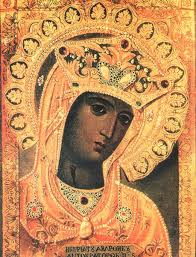
Desmond Tutu's daughter 'banned' from Church of England funeral because of marriage to woman
The daughter of the late Desmond Tutu has reportedly been prohibited from leading her godfather's funeral by the Church of England because she is married to a woman.

Mpho Tutu van Furth, who is a practicing Anglican priest in the US, had been asked to officiate the funeral of the late Martin Kenyon on Thursday in Shropshire.
In a statement carried by the BBC, the Diocese of Hereford said: "Advice was given in line with the House of Bishops current guidance on same-sex marriage."
Ms Tutu van Furth reportedly told the broadcaster the decision "seemed really churlish and hurtful", and the diocese described it as "a difficult situation".
The Church of England does not allow same-sex marriage in its clergy, but The Episcopal Church in the US - of which Ms Tutu van Furth is a part - does.
She had her licence to officiate as a priest rescinded in South Africa when she revealed her sexuality and married Marceline van Furth, a Dutch academic, in 2015.
When the Kenyon family discovered Ms Tutu van Furth had been barred, they moved the service from St Michael and All Angels in Wentnor, just south of Shrewsbury near the England-Wales border.
The funeral was moved to a marquee in a neighbouring vicarage so that the goddaughter could officiate.
Ms Tutu van Furth told the BBC: "It's incredibly sad. It feels like a bureaucratic response with maybe a lack of compassion.
"It seemed really churlish and hurtful. But as sad as that was, there was the joy of having a celebration of a person who could throw open the door to people who are sometimes excluded."
Desmond Tutu, who died in December 2021, won the Nobel Peace Prize in the 1980s for his work tackling apartheid in South Africa.
He also championed gay rights and campaigned for same-sex marriage.
In 2013, he said: "I would refuse to go to a homophobic heaven. No, I would say sorry, I mean I would much rather go to the other place.
"I would not worship a God who is homophobic and that is how deeply I feel about this... I am as passionate about this campaign as I ever was about apartheid. For me, it is at the same level."
Reference: The telegraph: Gareth Davies
Church replaces Edward Colston stained glass window ... with Jesus in a migrant boat
Church replaces Edward Colston stained glass window ... with Jesus in a migrant boat
Apicture of a Jesus in a migrant boat is set to replace a stained glass window dedicated to Edward Colston, the slave trader, in an historic Anglican church.

St Mary Redcliffe church in Bristol made the decision to remove four stained glass panels dedicated to Colston two years ago after the toppling of his statue.
The window was temporarily replaced with plain panels, and the church invited the public to submit new designs in a competition.
The panels formerly made up the bottom section of the North Transept window, commonly known as The Good Samaritan, depicting the story that Colston had taken as his motto.
The four new panels are designed to “depict a crucial aspect of our shared Bristolian history as neighbours, and reference a relevant aspect of the character of Christ”, according to Ealish Swift, the artist.
Among them is one that “portrays the current refugee crisis, and Jesus as a child refugee fleeing to Egypt”, Ms Swift, a Bristol-based junior doctor, said in her artist’s statement.
“Jesus is depicted as multiple ethnicities to counter the Anglo-centric narrative of ‘white Jesus’, and running water flows between the panels to centre the designs in the seaport city of Bristol,” she added.
Ms Swift said her design draws upon the “the deep and complex history of Bristol, from atrocities of the past to modern day concerns, to remind us of the journeys of our neighbours and how we have come to be together at this moment, looking forward towards a shared future”.
She was unable to be at the unveiling of her design as she was performing surgery, but was delighted to find out she was the winner, but told the South West News Service: “I am deeply honoured that my design has been chosen for this wonderful space that means so much to me.”

Although prompted by the toppling of the Colston statue, the replacement of the Colston window was part of a larger process at St Mary Redcliffe in the ongoing exploration of, and engagement with, contested heritage that will continue over the coming months and years.
The grade I-listed church is deeply rooted in British history, having been described by Queen Elizabeth I upon her visit in 1574 as “the fairest, goodliest and most famous parish church in England.”
A spokesman from the church said the competition was launched as “part of an ongoing process of reflection and action to ensure that today’s church building echoes St Mary Redcliffe’s stated values and is welcoming to all”.
Dan Tyndall, the parish priest, told South West News Service: “The winning design is powerful and imaginative, managing to resonate with contemporary issues and yet will also stand the test of time.
“Ealish’s concept was very popular with visitors to the church and will sit well within the current Victorian window”.

Another of the new panels celebrates the Bristol Bus Boycott, which Ms Swift said “paved the way for the Race Relations Act of 1965, with Jesus as a fellow protester and radical.”
The Bristol Bus Boycott of 1963 arose from the refusal of the Bristol Omnibus Company to employ black or Asian bus crews in the city.
Reference: Telegraph: Telegraph reporters
Good Samaritans help rescue Hawaii girl shackled on school bus, forced to smoke meth
Good Samaritans help rescue Hawaii girl shackled on school bus, forced to smoke meth
AHawaii man and repeat offender is accused of kidnapping a girl at knifepoint and keeping her captive in a school bus before she escaped, according to court documents.L
On Sept. 16, Duncan Mahi, 52, allegedly approached the 15-year-old victim and her boyfriend, also 15, on Anaehoomalu Beach; robbed the couple at knifepoint; forced the girl to tie up her boyfriend using zip-ties while threatening to kill her if he got loose; and then kidnapped the girl, according to a police report.
Mahi led the girl to his vehicle and instructed her to put on a disposable mask and hat.
"While driving on the highway near saddle road [sic], Mahi forced [the victim] to ingest methamphetamine by smoking. Fearing she would be harmed, [the victim] reluctantly smoked the methamphetamine out of a pipe provided to her by Mahi," the police report states.
Mahi is accused of sexually assaulting the girl and forcing her to smoke again in his vehicle. The victim pretended to sleep for the remainder of the ride. When they arrived at Mahi's property, he allegedly led the victim on to a yellow school bus and shackled her inside with about a three-foot range for movement, the police report states.
The victim's boyfriend was eventually able to call 911, and police issued a MAILE AMBER Alert for the missing girl the same day she went missing.

On Sept. 17, the victim convinced Mahi to take her to Cafe Pesto in Hilo Bay to eat. Once they reached the cafe, the victim was able to run away from Mahi.
Good Samaritans witnessed Mahi and the victim fighting outside the cafe and saw the girl trying to run away from the suspect, who allegedly told witnesses that she was his "daughter," the report states.
"That's the girl on the news," one witness who saw the dispute said aloud, according to the police report.
Mahi then allegedly fled into a vehicle, which a witness photographed and alerted to authorities.
The 52-year-old is charged with two counts of two counts each of kidnapping, first-degree terroristic threatening and first-degree robbery, as well was one count each of meth trafficking and first-degree sexual assault. He is being held on $2 million bail.
Mahi, who has a lengthy criminal history, was previously charged with first-degree terroristic threatening in 2018.
Reference: Fox News: Audrey Conklin
When is Navratri 2022? Start date of the Hindu festival, meaning behind it and fasting rules explained
When is Navratri 2022? Start date of the Hindu festival, meaning behind it and fasting rules explained

Hindus around the world are preparing for Navratri, a festival celebrated every autumn.
It usually falls between September and October and lasts for nine days, with the word Navratri translating to “nine nights”.
Here is everything you need to know about it.
What is Navratri?
Navratri is one of the most important and widely-celebrated festivals in India, with devotees to the Goddess Durga honouring her nine forms over the nine days.
During this period, devotees observe a fast, perform a worship ritual called puja and celebrate the nine displays of Durga’s feminine power to the world.
Each day is marked with a different colour and worshippers dress in the colours which correspond to each day.
People also wear their best traditional attires to attend dandiya – a traditional dance – nights all over the world.
When is Navratri 2022?
This year, Navratri starts on Monday 26 September and ends after Tuesday 4 October.
Here are the colours associated with each day:
- 26 September – white
- 27 September – red
- 28 September – royal blue
- 29 September – yellow
- 30 September – green
- 1 October – grey
- 2 October – orange
- 3 October – peacock green
- 4 October – pinkHow is it celebrated?
Special images of Durga commemorating her victory over the buffalo-headed demon Mahishasura are worshipped daily, and on the 10th day (Dussehra) they are taken in jubilant processions to nearby rivers or reservoirs for immersion in water.
In addition to family observances, the puja, or ritual, days are also celebrated with public concerts, recitations, plays, and fairs.
Dussehra is observed differently across the world, significantly in various parts of subcontinent India, with the celebrations having been featured in Unesco’s “Intangible Cultural Heritage of Humanity”.
In northern and western India, where the day is predominantly spent honouring Lord Rama, the celebrations centre significantly around Ramleela – a theatrical re-enactment of his life.
Hundreds of plays involving drama, dancing and music are performed in outdoor festivities to families and friends, with huge effigies of Ravana later set alight to signify the destruction of evil.
Those in southern and eastern parts of the country mainly dedicate the day to goddess Durga, and host processions by the waterfront.
Clay statues are ceremonially carried to a river or ocean while music and prayers are chanted, before being immersed in the water. The statues dissolve once immersed, signifying the return of Durga to other gods.
Some mark the festival by observing fast for the entire nine days, others keep the fast for the first two or last two days of Navratri.
Most people do not consume non-vegetarian food or alcohol. Onion and garlic are also avoided.
Reference: Alex Finnis -
Articles-Latest
- Pope Leo's Travels 2026
- Donald Trump Insults Pope Leo
- Secrets of the Vatican
- Jews - Hebrews - Israelites - What is the Difference
- Easter Sunday Celebrations
- Job Beyond the Verses
- The Dark Fate of the Soldier who Crucified Jesus on the Cross
- What Happened to Jesus's 12 Apostles
- Book of Judges
- Fasting & Praying
- Pope Leo's Visit to Monaco
- Spiritual Warfare
- Prayers for Healing
- Night Prayers
- Prayers - To start your Day
- Palm Sunday 2026
- The 12 Tribes
- Revelations
- The Last Days
- The Book of Psalms
Articles-Most Read
- Home
- Let There Be Light
- Plants that feel and Speak
- The Singing Forest
- The Singing Forest-2
- Introduction
- Meditation
- Using Essential Oils for Spiritual Connection
- Plants that Feel and Speak-2
- Heaven Scent
- Purification
- Making the Spiritual Connection
- Anointing
- Essential Oils: The unseen Energies
- The Sanctity of Plants
- The Aroma Of Worship-Foreward
- The Aroma Of Worship - Introduction
- Methods Of Use
- Spiritual Blending
- Handling and Storage