Login
Who's On Line
We have 46 guests and no members online
MailChimp Signup




Most Read Posts

Making The Transition

Making The Transition
We make plans throughout our lives and even plan our funeral, but seldom do we plan our own death. This is not the case with Tibetan lamas. who place great store on the abandonment of grasping, yearning and attachment. They give everything away before death, if possible of course, so there will be no argument over the distribution of the physical possessions, which could negatively influence the next incarnation.
Some, at what they consider the right time, simply close their eyes and release the spirit. in other cultures, especially nomadic ones, old people choose to be left behind if they are having difficulty keeping up, and starve to death. However, most of us do not embrace or accept death in this way; we fight it tooth and nail and think that by planning for it we're giving in.
The more usual scenario is that we experience some-one else dying, and find ourselves making plans for the funeral, if not death itself. Flowers are an essential part of most funeral practices, perhaps because their fragrance brings a special atmosphere to the event. When Mother Teresa died in 1997, flowers that looked like tuberose surrounded the coffin, ad I wondered if this was her favourite flower, and whether they had been in the room as she made her transition.
Certainly, this very aromatic flower would have filled the room with its heady perfume; as essential oil of tuberose equally would have done.
Aromas are so personal, its impossible to suggest essential oils to use at this most important time. This is the time to use fragrances we have loved, that induce in us peace and joy. If we are too weak to organize it ourselves, friends and family can be asked to get the essential oils diffuser, so that the enveloping etheric clouds of fragrance can accompany us on the journey 'home'.
Make sure you use pure, natural essential oils, rather than the man-made synthetics which, to the untrained eye and inexperienced nose, can be disguised to look like the real thing. If ever there was a time we returned to nature, it is this - our true nature. We all have an image perhaps of what the afterlife will be like, but one thing is almost certain, there are no man-made chemicals in Heaven.
People who have died and been resuscitated, and had near-death experiences, notice delightful aromas: we will breathe in the fragrant heavens as we pass over. But when we are lying there, waiting for this to happen, what do we smell? Let us hope it is not the urine of a patient in the next hospital bed, or a nurse with body odour. Even in the comfort of our own home, we may not appreciate the smell of frying coming from the kitchen. Unpleasant odours will make it harder to find any beauty there may be in death.
This is the one time in life to embrace the beautiful: thinking of the wonderful things we have done in our life, and of the special people we have known; and, hopefully, being in the company of people who shower us with their unconditional love. Sweet-smelling aromas, well-chosen and sensitively used, contribute the beauty of nature to the dying experience. And in a hospital ward, it attracts people to the area, making it less lonely.
- Sogyal Rinpoche, author of Tibetan Book Of The Living And Dying, has said:
What counts at the moment of death is whatever we have done in our lives. Help the dying person not to face-death empty-handed, help him or her to mind meaning in his or her life, even if he or she has many regrets now he can make the end of his life meaningful.
Our state of mind at the moment, a change of heart at the time of death, can influence our future and powerfully transform our karma. Our last thoughts and emotions before death have a powerful and determining effect on our immediate future. The quality of the atmosphere when we die is important. When someone is dying we should do all we can to inspire positive emotions, sacred feelings like love and compassion....
If love and emotion can be expressed, the tears allowed to fall, before the actual moment of death, the spirit can be released undistracted. This brings us to a very important point. If preparing essential oils for someone who is dying, don't think of it as a portion to draw them back to the living. No earthly fragrance can bring them back. Think of it as simply providing a pleasant atmosphere in which they can pass over, or as a cloud of delicious fragrance to waft them on their inevitable way; our last, parting gift.
Reference:The Fragrant Heavens: Valerie Ann Worwood.
The Fragrance Of The Spirit
The Fragrance Of The Spirit
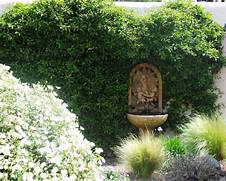
Your spiritual fragrance transforms the atmosphere of the world like an incense stick transform the atmosphere in a room. The incense stick spreads its fragrance regardless of the conditions and people in the room. Brahma Kumaris
Everyone has their own spiritual fragrance which carries the vibrational frequencies of the spirit, and is in harmonic resonance with their inner self. This fragrance is completely different to that produced by angels or any other heavenly beings.
These personal spirit fragrances seem to comprise various smells- such as deep, rich resins, fully flavoured fruits, fully open flowers, verdant grass, meadows, trees or woods- although they are unlike any fragrance on earth and, like angel fragrances, are difficult to describe.
Each fragrance has a complexity of highs and lows that weave in and out of each other, reflecting the journey of our soul. It reflects all the places we have been, all the people we have been in contact with, all the emotions we have experienced, and all the personalities we have passed through - including those from other realms and, perhaps, other lifetimes.
- And it is a combination of all these things that comprises our spiritual perfume. We carry the smells associated with past times, just as we carry those of this lifetime, and they are all woven inextricably together, as pieces of the same aromatic cloth.
- Our personal-spirit fragrance is the one we are most at ease with but, at the same time, it has the capacity to affect us emotionally an the very deepest levels, stirring and moving us in ways which can be exciting, provocative, illuminating and liberating. ultimately, our spiritual fragrance will connect with the glorious soul fragrance, an aspect of the universal whole.
Fragrant Transitions - 2
Fragrant Transitions - 2
These fragrances which occur at times of bereavement bring with them memories and comfort. Perhaps they are brought by angels, so we know that person is at one with the heavens and is sending this message of love. Perhaps the spirit of the dead person ahs come to say goodbye, to let us know they are there in the ether and are moving on.
Some would say it is just te mind playing tricks, but it is not just the aroma that comes. Associated with it is information which is often as clear as a bell, and comes not from within, but from without. The fragrance is reassuring because it is a link , but it is also transformational in that it can jolt us out of a behavioural mould, allowing us to move on, in some sense ourselves released.
This experience of 'scenting' happened to a Mrs Case of Exeter, England, who then went on to research the subject. In the private publication which resulted, she wrote:
People who have lost their sense of smell can smell it. Sometimes two people can smell it, and a third cannot. Sometimes many people share it; and often, as in a service in church, only one person smells it and the others notice nothing. Sometimes the scent is diffused, and at others localized.
One of her informant's a widow, wrote: 'I felt dreadful all that day and eventually prayed for the phenomena of scentings and warmth to return and next day it was back again and remained with me another week or two, gradually lessening as my burden of grief became more bearable.' Mrs Case notes that ' the sanctity derives from the agent, not the recipient'. meaning that these kind of extrasensory olfactory experiences relate to ordinary human beings who have passed on to that place which produces 'the odour of sanctity', signifying their special holiness.
Christian saints often emitted sweet-smelling fragrances, both when dead and alive. The sweet aroma of St Patrick apparently filled the room in which his body lay. The English St Milburga, a daughter of Merewald, Prince of Mercia, founded a monastery for virgins in Wenlock and died in the year 700. Her body lay in a vault in her church for 400 years and was almost forgotten, until a sweet-smelling perfume emitting from her tomb led to its rediscovery.
The seventeenth-century St Theresa of Avila spent twenty years as a contemplative sister of the Carmelite order, then became a reformer, before dying at the age of sixty-eight. Some years later, a sweet fragrance began to come from her grave, and the body was exhumed and found to be fresh and whole.
In the twelfth century, St Isiodore's body was disinterred forty years after his death, and again 400 years later, and both times was found not to have decayed and to be emitting a fabulous odour. And in the early seventeenth century, the coffin of the Russian St Juliana, when opened so one of her sons could be buried with her, was found to have a beautiful fragrance coming from it.
The Greek Orthodox St Demetrius left relics which exuded a sweet-smelling oily substance. This phenomenon, which also occurs with icons, is known as 'myrrh gushing' and the substance was said to have healing properties. A basilica was built on the St Demetrius' death and pilgrims used to collect the fragrant oil from a basin in the crypt which can be seen to this day in Thessaloniki.
The relics themselves stopped producing oil when they were stolen by Italian crusaders in the thirteenth century, and although returned to Greece in 1980 have not exuded it since, although a strong fragrance is often smelt around them. A 'myrrh'-exuding icon can be seen today at the monastery of Malevi near Tripoli in the Peloponnese.
A great number of saints were said to be fragrant during their lives. St Francis of Assissi is said to have smelled of lemon; St Rose of rose; St Catherine of Violets; and St Cajetan of orange blossom. St Lydwyne's aroma had several components, including cinnamon, ginger, clove, rose and violet; while the breath of the thirteenth-century Blessed Herman of Steinfeld was like a garden of fragrant flowers.
This 'odor of sanctity' as it is called, denotes the person had been elevated to some higher level of existence, one closer to divine. It puts people in a category other than that of the base, material life. The aromas have an unreal and powerful effect, seeming to break the aromatic rules, such as having no apparent source.
The historical records show people were concerned to highlight this, and explained these aromatic happenings occurred despite there being no incense, spices or fragrant ointments or balms around. Fragrance is supposed to be of the air, but in the case of the seventeenth-century Venerable Benedicta of Notre Dame du Laus, she was said to be so divinely fragrant, everything she touched became perfumed.
Aroma is supposed tom travel downwind, but an Indian saying goes, "The fragrance of the flower travels with the wind, but the odour of sanctity travels against the wind".
Experiences of smell phenomena are happening today, all around the world. If they only involved one person the unusual aromas could be dismissed as a figment of an overactive imagination. But often hundreds of people are 'witness' to the same aromatic event, and we can suppose that something is less explicable is going on.
Reference: The Fragrant Heavens: Valerie Ann Worwood
Fragrant Transitions
Fragrant Transitions
And there came Nicodemus, which at the first came to Jesus by night, and brought a mixture of myrrh and aloes, about an hundred pounds weigh. Then took they the body of Jesus, and wound it in linen clothes with the spices, as the manner of Jews is to bury: ST JOHN 19:39:-40
One of the most interesting questions in life is what happens after death? This question is relevant not only to us, the living, but to people we have loved and who are no longer with us - we live in hope that they or their spirit live on. Each spiritual tradition has its answer to 'the big question', and it's very confusing that they differ so much in their beliefs.
Our ancestors didn't have this problem as they usually grew up and didn't have this problem as they usually grew up and lived within one spiritual tradition and adhered to that. Today, people can travel the world, watch TV programmes about other cultures and beliefs, and read innumerable books, with different answers, on the subject. No wonder so many people are in spiritual 'crisis' unsure of where to turn, and even more uncertain about what the inevitable future will bring.
Our source of information comes from near-death experiences, which are remarkably similar: the spirit first floats above the dead body, watching doctors or other people trying to revive it, hearing all that goes on, then they see a bright white light, or a tunnel, appearing before them. At the end of this tunnel, or on the other side of a river, there is someone to greet them, variously described as a lone figure shining brilliantly, an angel, Jesus, a spiritual guide, or loved family members and friends, even pets.
Whatever the difference s in these accounts, one thing is constant: the profound sense of peace. This so envelopes a person, they often don't want to return to this life, but are told their time has not yet come. These near-death experiences are often associated with fabulous fragrances, which are described as 'heavenly', 'delicious', 'unbelievable' and 'indescribable'.
Fragrance plays a unique part in the interfaces between the living and their earlier life, between the living and the dead and between present and past lives. Indeed, aroma is a language that traverses many layers of existence, an avenue not only of exploration but of explanation.
- The most common of these aromatic revelations occurs between people who have died and people they loved who have been left behind. The following story was told to me by a client: "I used to live with this fellow, and loved him very much, but he left me and I never heard from him again. That had been a long time ago. Then, one evening I drove past a road that led to where he lived, and had a very strong urge to drive past his house. I fought the feeling, but it was so difficult and I felt torn apart. I hadn't thought about him for ages but now, all of a sudden, he flooded my mind.
- I was at the traffic lights, telling myself to be strong and not even to think about driving past his house.The lights changed and I drove home. All the way, I had a deep emotional sensation, remembering how good we had been together, and I felt the hurt all over again. Suddenly, the emotion changed, and I felt flooded with love.
- The next day I had almost forgotten about the incident, and was getting on with my work, when I smelled his aftershave. it was an unusual one he'd had sent from Italy. It was my nose, and everywhere I went I could smell it. Suddenly, I knew he'd died and passed on, and this was his way of saying goodbye and that he had really loved me.
- I cried for a while, but the smell kept hitting me, again and again and the love filled me. I must have fallen asleep in the chair, and when I woke up there was no smell. All the pain and hurt I'd felt for years had gone. I knew then I could find someone else because before that I'd always been alone, afraid to be hurt again. His passing and sending me love made me realize I'm lovable and deserve to find another person, and that my life could start again.
- Stories of aromas particularly associated with a person who passed on are not uncommon. It is sometimes the smell of flowers that the loved one liked, or that they used to give to the person left behind. Other smells associated with people also occur, such as perfume, tobacco smoke and aromas associated with their work - coal with coal miners, for example - or of foods they particularly liked, such as garlic.
- The more general aromas of people are also found lingering in the air, and these aromas may be quite imperceptible to others. But, more commonly, the aroma is simply a powerful floral fragrance with no particular connotation to either the recipient or the person who has passed on.
Articles-Latest
- Pope Leo's Travels 2026
- Donald Trump Insults Pope Leo
- Secrets of the Vatican
- Jews - Hebrews - Israelites - What is the Difference
- Easter Sunday Celebrations
- Job Beyond the Verses
- The Dark Fate of the Soldier who Crucified Jesus on the Cross
- What Happened to Jesus's 12 Apostles
- Book of Judges
- Fasting & Praying
- Pope Leo's Visit to Monaco
- Spiritual Warfare
- Prayers for Healing
- Night Prayers
- Prayers - To start your Day
- Palm Sunday 2026
- The 12 Tribes
- Revelations
- The Last Days
- The Book of Psalms
Articles-Most Read
- Home
- Plants that feel and Speak
- Let There Be Light
- The Singing Forest
- The Singing Forest-2
- Introduction
- Meditation
- Using Essential Oils for Spiritual Connection
- Making the Spiritual Connection
- Plants that Feel and Speak-2
- Heaven Scent
- Purification
- Anointing
- The Sanctity of Plants
- Essential Oils: The unseen Energies
- The Aroma Of Worship-Foreward
- Methods Of Use
- Spiritual Blending
- The Aroma Of Worship - Introduction
- Handling and Storage