Login
Who's On Line
We have 95 guests and no members online
MailChimp Signup




Most Read Posts

Pope Francis sparks resignation rumours
Pope Francis sparks resignation rumours

Reuters Pope Francis resignation rumours - Reuters
Pope Francis has fuelled speculation he is set to retire after announcing he will attend a ceremony founded by one of the few Pontiffs who stepped down from the role during their reign.
Rumours of a papal resignation in Italian and Catholic media have been bolstered by the Vatican’s announcement on Saturday that the Pope will visit the city of L’Aquila in August for a feast initiated by Pope Celestine V.
Traditionally popes are expected to hold their post until death, but there have been some exceptions to the rule, including Celestine V and more recently Benedict XVI.
The Vatican and the rest of Italy are usually on holiday in August to mid-September, with all but essential businesses closed, prompting the timing of the pastoral visit to raise eyebrows in Rome.
“With today’s news that (at)Pontifex will go to L’Aquila in the very middle of the August consistory, it all got even more intriguing,” tweeted Vatican commentator Robert Mickens, linking to an essay he had published in La Croix International about the future of the pontificate.
The basilica in L’Aquila hosts the tomb of Celestine V, a hermit pope who resigned after five months in 1294, overwhelmed by the job. In 2009, Benedict visited L’Aquila, which had been devastated by a recent earthquake and prayed at Celestine’s tomb, leaving his pallium stole on it.
Vatican watchers on high alert
For weeks now the Pope’s increased mobility problems caused by a strained ligament and his use of a wheelchair have prompted Vatican watchers to wonder if he might follow in the footsteps of Benedict XVI, who resigned after just seven years.

© Provided by The Telegraph Pope Francis in a wheelchair following knee treatment - AFP
Last month Italian daily newspaper Il Foglio reported that Francis had said he would rather retire than undergo knee surgery.
The announcement last week of a consistory to create 21 new cardinals has further convinced some commentators of the Pope’s intention to retire. Sixteen of the cardinals are under the age of 80 and therefore eligible to vote in a conclave to elect Francis’s successor. Once they are added to the ranks, the pontiff will have stacked the College of Cardinals with 83 of the 132 voting-age cardinals.
While there is no guarantee how the cardinals might vote, the chances that they will tap a successor who shares the incumbent Pope’s pastoral priorities become ever greater.
Francis was elected Pope in 2013 on a mandate to reform the Roman Curia. Now that the nine-year project has been rolled out and at least partially implemented, Francis’s main task as Pope has in some ways been accomplished.
In September 2021, upon being invited by the Bishop of Ragusa to attend the seventy-fifth anniversary of the foundation of the Diocese in 2025, the Holy Father reportedly smiled and told the bishop that John XXVI would be making the visit, not him. This in turn fuelled new rumours of an imminent retirement.
Health issues add to retirement rumours
Last year, after undergoing colon surgery, rumours began circulating that he would,
soon leave the Vatican owing to his worsening health.
“I’m not playing this game,” he told a Spanish radio station at the time. “I don’t watch television. During the day I’m given a report on the day’s events –
but I found out much later, a few days later, that there were rumours of my resignation. Every time a Pope is sick there is a wind, hurricane, of conclave.”
Despite speculation surrounding his tenure, the Pontiff has a series of major engagements in his calendar.
In addition to upcoming trips this year to Congo, South Sudan, Canada and Kazakhstan, in 2023 he has scheduled a major meeting of the world’s bishops to debate the increasing decentralisation of the Catholic Church, as well as the continued implementation of his reforms.
Reference: The Telegraph: Sofia Barbarani
Mexican Mayor Kisses Alligator Bride after age-old ritual wedding
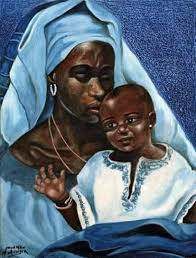
Mexican Mayor Kisses Alligator Bride after age-old ritual wedding
Reference: San Pedro Huamelula
Jehovah’s Witness organisation has secret database of child sex abuse claims against members
Jehovah’s Witness organisation has secret database of child sex abuse claims against members
The Jehovah’s Witness organisation has amassed a secret database of child sexual abuse allegations against its members, the Telegraph can disclose.
 © Provided by The Telegraph Lacie Jones, pictured as a child, whose stepfather, a senior Jehovah’s Witness, was recently jailed for abusing her when she was younger
The religion – which has more than 140,000 members in Britain – has collated details of molestation accusations over the last 25 years at its headquarters, known as Bethel or “Branch” among followers.
Documentation obtained by this newspaper shows that senior officials - known as elders - were asked in the late 1990s to log details of child abuse allegations and forward them on to the central office, which is now based in Chelmsford.
The instruction to record and keep details of abuse has been repeated multiple times since then.
The existence of a database of abuse allegations has already been established in the United States and Australia, but this is the first time that it has been shown to be in Britain.
In a statement, the Christian Congregation of the Jehovah’s Witnesses said current child protection policies instruct leaders to “make a report to the police wherever it appears that a child is in danger of abuse”. They did not however, respond to questions about whether the historical database of allegations had been passed to the authorities.
Database ‘must now go to police’
Victims of abuse within the religious group have now called for any collection of allegations to be passed to the police.
Lacie Jones, whose stepfather held a senior position in the Jehovah’s Witnesses and was recently jailed for abusing her as a child, said: “They need to hand the database to the police straight away to ensure more children aren’t at risk”
 Provided by The Telegraph Lacie Jones urged the group to hand the database to the police - CLARE HEWITT
The revelation about the retention of records will raise questions about how the organisation responds to allegations of child abuse among its members.
Until now, it is largely the Catholic Church which has been the focus of criticism over its handling of child abuse claims, amid accusations that they have failed to take sufficient action.
The Telegraph began investigating allegations that the Jehovah’s Witnesses has a secret database of abusers after receiving a tip-off last year.
The Investigations Team have made a podcast – “Call Bethel” – as they sought to establish whether the database exists.
In 2014, the Charity Commission launched an investigation into the Jehovah’s Witnesses, amid concerns about safeguarding.
The probe is still ongoing, but court documents show that the regulator attempted to obtain policies about child sexual abuse and data held – which is thought by many to have been an attempt to acquire the database, if it existed.
Elders asked to record whether abuse was ‘one-time occurrence or practice’
Reporters obtained documentation which shows that in 1997, elders in Britain and Ireland were asked to provide a “report” detailing information including, the age of the victim and whether it was a “one-time occurrence or a practice [sic]” noted.
The letter said that senior members “should be alert to the activity of any who are known to have molested children in the past”, the three-page document warned.
“It was possible that some who were guilty of child molestation were or now are serving as elders, ministerial servants, or regular of special pioneers.”
 Provided by The Telegraph Louise Palmer said in 2017 that she had been told not to report being raped by her brother, who was also a Jehovah’s Witness - BBC
From 1991, elders were told to record information about “child molesters” to stop them moving congregations without a warning being raised and had taken steps to educate members about the issue.
From these dates onwards, The Telegraph has seen multiple documents requesting congregation leaders record and securely archive abuse allegations.
Paperwork or information is then often passed to the head office.
The Telegraph has seen a “Child Protection” document asking for information about victims, the abuser and action taken. The one seen by reporters is from a British congregation.
Congregations also keep documents used to record why an individual has been “disfellowshipped”, the term used when someone has to leave the religious organisation after accusations of wrongdoing, which could include accusations of child abuse.
Ms Jones obtained documentation held by her previous congregation after making a complaint
to police about her stepfather, but it is unclear if this information was also passed to the religious group’s head office.
Elders asked to detail abuse in five-page questionnaire
The Telegraph has also seen a five-page questionnaire given to elders who have reported abuse in their congregation.
The paperwork has a London phone number at the top, which asks them to provide details of abuse including “total number of alleged victims”.
It is unclear what happens to the document once it has been returned, but the questions raised offer a further glimpse of the kinds of information collated centrally.

The Christian Congregation of Jehovah’s Witnesses said that their “branch office keeps a
brief notation of a congregant who is known to have committed child sexual abuse” and that information is “checked” if they are considering promoting an individual within its ranks.
“This ensures that an individual who has committed child abuse is not appointed an elder or ministerial servant”, they said.
They highlight that their retention policies were not criticised in a recent inquiry which examined how religious organisations have responded to allegations of child abuse and how they have taken steps to educate and protect congregants.
The statement said that the organisation “recognise[d] they are not immune to the evil of child sexual abuse” and that they had “endeavoured to address this pernicious evil at its root” by providing members with guidance and education on the subject.
Reference: The Telegraph: Investigations team
‘Hitler’s pope’ struck dirty deal with Nazi prince to stay silent on persecution of Jews
‘Hitler’s pope’ struck dirty deal with Nazi prince to stay silent on persecution of Jews
A Nazi prince who was a descendant of Queen Victoria conducted secret talks with the Vatican on behalf of Adolf Hitler to strike a deal under which the Holy See stayed silent about the persecution of the Jews, a new book claims.

AP Pope Pius XII receives an envoy to the Vatican in 1940 - AP
In return, the Nazi regime promised to end its campaign of confiscating the assets of the Catholic Church in Germany and clamping down on religious freedom.
Hitler had replaced Catholic schools with state schools, supplanted Christian teachings with Nazi doctrine and shut down religious institutions in Germany and Austria.
The claims of a dirty deal lend further weight to critics who accused Pope Pius XII – elected in 1939 and derided by some as “Hitler’s Pope” – of pursuing a cynical policy of preserving Catholic influence in Germany while turning a blind eye to the plight of the Jews.
The new information about the secret negotiations, based on documents found in the Vatican archives after they were opened to scholars in 2020, are contained in The Pope at War: The Secret History of Pius XII, Mussolini and Hitler, by David Kertzer, an American academic.
“Few topics in Church history, or the history of the Second World War, are as hotly contested as Pius XII’s decision to avoid direct public criticism of Hitler or his regime, and to remain publicly silent in the face of the Holocaust,” he writes.
In the months leading up to the outbreak of the Second World War, Hitler sent Prince Philipp von Hessen, a German aristocrat, to open up a clandestine backchannel for talks with Pope Pius XII.
The prince was a great-grandson of Queen Victoria. He had been sent to prep school at Bexhill-on-Sea in Sussex, had an English governess and eventually married the daughter of the king of Italy.

Provided by The Telegraph Prince Philipp von Hessen with his bride, Princess Mafalda of Savoy, daughter of the Italian king, in 1925 - Getty
As a result of the negotiations he pursued, the Pope agreed to stay out of “partisan politics” in Germany, including what Hitler called the “racial question” – the Nazis’ persecution of Jewish people.
His predecessor, Pope Pius XI, had been a critic of the Nazis and Hitler was keen for the Vatican’s disapproval of his regime to end.
In return, the Fuhrer pledged to relax efforts to curtail the Catholic Church’s wealth and independence.
The talks between von Hessen and the Pope were “so delicate that not even the German ambassador to the Holy See knew about them”, writes Prof Kertzer, a professor of Italian studies at Brown University.

Provided by The Telegraph The Vatican Secret Archives - documents relating to the papacy of Pius XII were opened to scholars in 2020 - Getty
“The existence of these talks was a secret the Vatican was eager to maintain long after Pius XII’s death - as it did for eight decades.”
Hitler’s emissary was deeply anxious that word of the talks might be leaked but was assured by the pope: “No one knows we’re having this conversation. Even my closest associates don’t know about it.”
Pius told the prince that he was “eager to reach an agreement with Hitler” and promised that if the Nazis called a “truce” with the Church, then German Catholics would be loyal, “more than anyone else” to the Reich.
The pope did not bring up, or voice objection to, the Nazis’ persecution of the Jews during the secret talks, which lasted from 1939 until 1941.
“Pius XII had other priorities,” Prof Kertzer writes. “As the head of a large international organization, his overriding aim in negotiations with Hitler’s emissary was protecting the institutional resources and prerogatives of the Roman Catholic Church in the Third Reich.
“But for those who see the papacy as a position of great moral leadership, the revelations of Pius XII’s secret negotiations with Hitler must come as a sharp disappointment.
“As the war years wore on, in all their horror, Pius XII came under great pressure to denounce Hitler’s regime and its ongoing attempt to exterminate Europe’s Jews. He would resist until the end.”
The last of the clandestine meetings between the pope and the prince took place in the spring of 1941.
By then, the Vatican had little to show for the faith it had put in the Nazi regime. “What the meetings did was string the pope along and help keep him silent. Hitler never intended to restore the prerogatives of the Church in Germany, but he knew how to dangle various enticements,” Prof Kertzer concludes in his book, which will be published on June 7.
Articles-Latest
- Pope Leo's Travels 2026
- Donald Trump Insults Pope Leo
- Secrets of the Vatican
- Jews - Hebrews - Israelites - What is the Difference
- Easter Sunday Celebrations
- Job Beyond the Verses
- The Dark Fate of the Soldier who Crucified Jesus on the Cross
- What Happened to Jesus's 12 Apostles
- Book of Judges
- Fasting & Praying
- Pope Leo's Visit to Monaco
- Spiritual Warfare
- Prayers for Healing
- Night Prayers
- Prayers - To start your Day
- Palm Sunday 2026
- The 12 Tribes
- Revelations
- The Last Days
- The Book of Psalms
Articles-Most Read
- Home
- Let There Be Light
- Plants that feel and Speak
- The Singing Forest
- The Singing Forest-2
- Introduction
- Meditation
- Using Essential Oils for Spiritual Connection
- Plants that Feel and Speak-2
- Heaven Scent
- Purification
- Making the Spiritual Connection
- Anointing
- Essential Oils: The unseen Energies
- The Sanctity of Plants
- The Aroma Of Worship-Foreward
- The Aroma Of Worship - Introduction
- Methods Of Use
- Spiritual Blending
- Handling and Storage